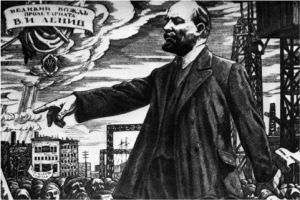
 ‘We shall now proceed to construct the socialist order.’ VI Lenin (speech to Second All-Russian Congress of the Soviets)
On 25 October 1917, (pre-revolution calendar) Vladimir Lenin, leader of the Russian Bolshevik Party, organised a successful coup d’etat and seized power in St Petersburg, then known as Petrograd.
Despite 90 years of Soviet propaganda, the events of ‘Red October’ were never a spontaneous uprising and a revolution by the people. It was an armed insurrection by a minority to overthrow a provisional government. Also, it was not – again despite Soviet claims – universally popular: fighting went on in Moscow and Petrograd for two weeks as the Bolsheviks tried to crush and silence their enemies, to be followed by a prolonged and brutal civil war.
Lenin himself was astounded by his revolution’s success, saying, ‘It takes your breath away.’ However, having seized power, he showed himself as authoritarian as any Czar. When the Second Congress of Soviets assembled on (modern calendar) 7 November 1917 it voted to ratify the revolutionary transfer of state power and, after a walk-out by the opposition – who claimed the coup was illegal – made Lenin ruler of Russia. Lenin’s Marxist Bolsheviks were now the government of a nation that was 3000 miles wide and had 11 time zones. Lenin’s famous call to arms was to unleash misery and death for millions: ‘We shall now proceed to construct the socialist order.’
Russia’s new ruler made crystal clear his aims and means of achieving them: ‘The goal of socialism is Communism,’ and ‘Personal liberty is precious – so precious that it must be rationed.’ In addition, just to show that he meant business, ‘Hang without fail, so the people can see them, no fewer than one hundred known kulaks, rich men, bloodsuckers.’ The rich and middle class got the message and promptly fled abroad clutching their valuables, leaving their property to be seized by the State.
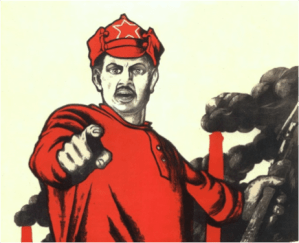 It rapidly became clear that Lenin was no harmless old revolutionary theorist, obsessed with permanent opposition to the bourgeoisie – he turned out to be a ruthless, rabble-rousing, power-hungry class warrior, determined to crush the rich for ever, using ‘The Party’ and his Red Guards to provide muscle when required.
Like all professional revolutionaries however, his priority was money – other people’s money. One of his first decrees was to close down all the banks and steal their money in the name of the State, leaving millions penniless.
Revolutionary socialists had always understood the importance of money to fuel their socialist dream. Josef Dzhugashvili, a,k.a ‘Stalin’ – which translates as ‘Man of Steel’ – or perhaps ‘steal?’ – was just one of many revolutionary bank robbers. He was the main planner of an infamous stagecoach hold-up in Tiflis in 1907. The Bolsheviks attacked a security coach, killing 40 guards and civilians. The thieves got away with over a million roubles, describing their atrocity as a legitimate ‘redistribution of capital for the Revolution.’
Another revolutionary socialist would-be Robin Hood, Mao Zedong, recruited ‘bands of brigands and bandits’ to support his revolutionary cause by theft. In 1927, he organised his own great train robbery in Hupei and stole a huge shipment of banknotes. Interestingly, Mao later organised another wave of ‘revolutionary bank robberies’ when he was actually Chinese dictator. During the Cultural Revolution (1966-76), he unleashed his Red Guard thugs to hold up dozens of banks to ‘shake up society’ in 1966. Ironically, in 1969 Mao suddenly remembered that he was also responsible for China’s law and order, and ordered his Red Guards to stop.
Revolutionary socialists sometimes make fat-cat capitalists seem almost benevolent. Peru’s Maoist movement, the Sendero Luminoso (‘Shining Path’) were not just brutal terrorist murderers responsible for the deaths of 30,000 Peruvians and $20 billion in damage. They were also accomplished thieves. Bank robberies – or ‘revolutionary expropriations’ – soon became a favourite means of raising funds for their planned revolution in Peru. In 1981, Shining Path carried out over 50 bank robberies in Lima alone, and the wave of bank robberies continued throughout the mid-1980s, along with international heists in Brazil and Mexico.
The lesson is that the Socialist State of Lenin’s dreams had as much need of hard cash as any capitalist one. But Lenin’s ‘socialist revolution’ did not confine itself to just stealing other people’s hard-earned savings.
The Russian Civil War demonstrated that not everyone, in what was to become the USSR, favoured Lenin and the Bolsheviks being in power. In the face of mounting anger and opposition from the now less-than-revolutionary masses, Russia’s new dictator ordered a crack-down on all opposition and protest. In December 1918, he ordered the creation of the Cheka, or the ‘All-Russian Emergency Commission for Combatting Counter-Revolution and Sabotage,’ the original bloodthirsty Soviet secret police organisation. The Chekists were led by a Polish aristocrat-turned-communist, the psychopathic Felix Dzerzhinsky, who ruthlessly murdered all Communism’s opponents. Lenin, and later Stalin’s, new secret police made the Czar’s rule seem compassionate by comparison.
The Cheka’s task was to hunt out ‘enemies of the state’. This led to what became known as the ‘Red Terror’. Suddenly anyone could be arrested. The Cheka became sole judge, jury and invariably executioner. Following a failed assassination on Lenin in September 1918, Russians came to dread the Cheka’s midnight knock on the door. Fellow Bolshevik Leon Trotsky even compared Lenin’s crackdown to Robespierre’s French Jacobin ‘Reign of Terror’ – in 1940, he got an ice pick through the brain for his pains. In all, an estimated 20 million Russians would eventually die at the hands of their Party masters in Communism’s ‘Revolutionary Paradise.’
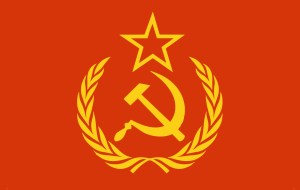 Fat on stolen money, and with dissenting voices silenced, Lenin now turned to actually governing his new Russia. A Decree on Land policy confirmed the actions of the peasants, who had quietly redistributed private land among themselves during the chaos. The Bolsheviks now reinvented themselves as representing an alliance of workers and peasants. The Hammer and Sickle became the symbol of the new Soviet Union. Other decrees ensured there could be no turning back from Lenin’s new Socialist order:
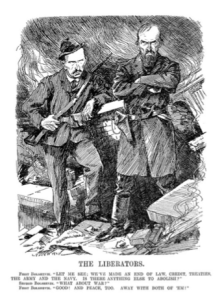 All private property was nationalised by the government
- All Russian banks were nationalised
- Parliament was abolished in favour of The Party
- Private bank accounts were expropriated
- The properties of the Church (including bank accounts) were expropriated
- All foreign debts were repudiated
- Control of the factories was given to the workers’ committees called ‘Soviets’
- Wages were fixed at higher rates than during the war; and a shorter, eight-hour working day was introduced
In our time, we have seen something similar in Venezuela. In 2005, Hugo Chávez announced Venezuela’s ‘great socialist leap forward’. Since then, the oil-rich country has followed the strict ‘socialist path’ and – just like the USSR – ruined its economy and impoverished its people. Despite a wealth of natural resources, Venezuela has turned into an economic and humanitarian disaster zone, thanks to an attempt by the government to run a ‘revolutionary socialist economy’ for Chavez’s deeply corrupt Party.
Meanwhile, the disappearance of Venezuelan credit and normal banking has aggravated runaway inflation and a recession, causing hundreds of thousands to flee the country amid chronic shortages, rising malnutrition and increased incidence of preventable disease.
Lenin’s decrees, plus his and Stalin’s desire for state control of everything (including the economy), eventually ruined the USSR, just as it is ruining Venezuela today. The lesson is that Marxist theory may work well in theory and dreams of stirring up ‘socialist revolutions’, but history has shown us that it cannot run a modern state properly. Lenin’s ‘October Revolution’ turned out to be a disastrous experiment with people’s lives and property that just didn’t work. It soon became obvious to all that in Lenin’s new ‘Socialist Order’ some quickly became more equal than others – just like before the Revolution.
The ‘October Revolution’ may have been one of the twentieth century’s defining events; it was also one of the most bloody and tragic.
It stands as a model for how not to reform society.
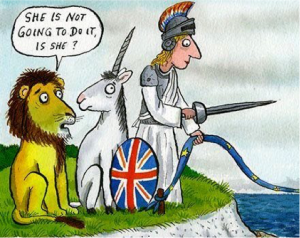 ‘I do declare that no foreign prince, person, prelate, state or potentate hath, or ought to have jurisdiction, power, superiority, pre-eminence or authority within this Realm.’ The Bill of Rights (English Parliament, 1689)
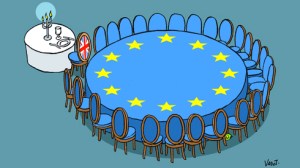 As for the Europhiles, Britain must be punished, if only pour décourager les autres.
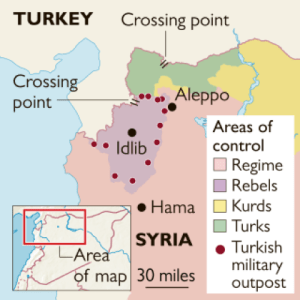 Winston Churchill once famously said, ‘battles are the punctuation marks of history.’ Well, we have just avoided a potentially disastrous ‘exclamation mark’ in the bloody history of the Middle East. Whilst the post-colonial
 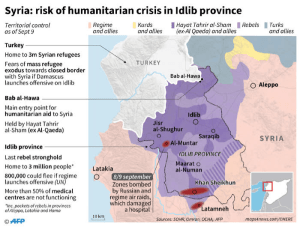 Many of the civilians in Idlib are already refugees from other parts of Syria following the collapse of the opposition resistance in cities such as Aleppo. The consequences of an all-out offensive against Idlib with its hapless civilians and the risk of Turkish troops fighting Russians could have led to a bloodbath.
 Algorithms rule your life. Really. I’ll also wager that most of us don’t have a clue what an algorithm is, or what it does. Most of us can’t even spell it.
 In the near future, something new and alarming will emerge. Tech pioneers are close to realising their dreams of creating human-like ‘artificial general intelligence’ (AGI): computers that don’t need programming, once they are up and running. Like
 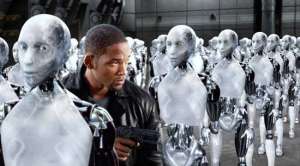 Eighty years ago the science fiction writer Isaac Asimov foresaw these problems in his ground-breaking
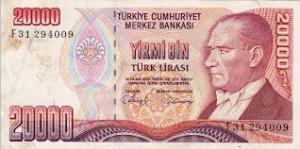
 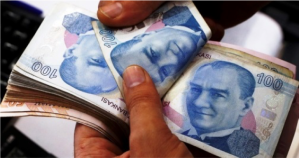 When Turkey sneezes, then the Turkish Republic of Northern Cyprus (TRNC) catches a cold. Nowhere is this more true than in the TRNC’s currency, the Turkish lira.
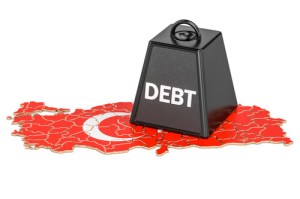 So what has gone wrong? The simple answer is that Turkey, having emerged from the global financial crisis of 2008-09, borrowed heavily in foreign currencies to fund its government’s programmes. With interest rates at an all-time low this made sense. Cheap foreign money could boost growth.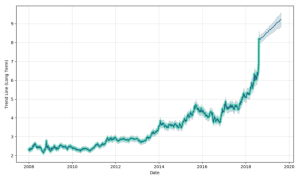

 The trouble with August is that the historical record shows that whilst everyone is on holiday it’s a great month to start a war.
 The threat is mortal. Tehran needs to sell its oil to survive. The lack of oil revenue could bankrupt Iran. The reaction to American threats from the regime was therefore predictable: Iranian President Hassan Rouhani promptly threatened to disrupt international oil shipments through the Persian Gulf if renewed US sanctions strangle Iran’s oil sales. ‘No one who really understands politics would say they will block Iran’s oil exports, and we have many straits, the Strait of Hormuz is just one of those …. We are the honest men who have throughout history guaranteed the safety of this region’s waterways. Do not play with the lion’s tail, it will bring regret.’
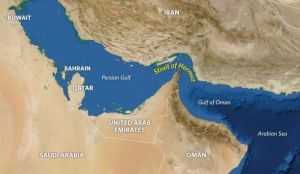 In turn, the Americans have warned Iran off. According to Washington, ‘Iran has threatened to close the Strait of Hormuz. They’ve done that in the past. They saw the international community put dozens of nations of the international community naval forces in for exercises to clear the straits. Clearly, this would be an attack on international shipping, and it would have, obviously, an international response to reopen the shipping lanes with whatever that took, because of the world’s economy depends on those energy supplies flowing out of there.’
 Here’s a riddle for you:
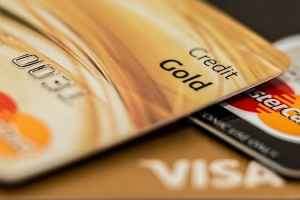 For a start, in many cases, money as a traditional exchange of value is losing ground. Money is becoming much more a concept of ‘credit reassignment’ rather than a transfer of physical material. Everywhere today people are using credit and debit cards on a regular basis in everyday situations, such as shopping. These are cashless transactions. The question is, ‘What exactly is this cashless society?’ This leads to real impacts of living in a cashless world?
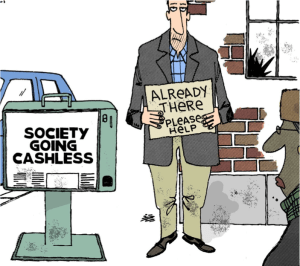 Moreover, there are some clear downsides to a cashless world. First, it will alienate a lot of people and put them on the fringe of society, if not make them outlaws. Not everyone has a smartphone, a bank account or even a permanent address.
 Sir Winston Churchill famously growled, ‘Democracy is the worst form of government – except for all the others.’
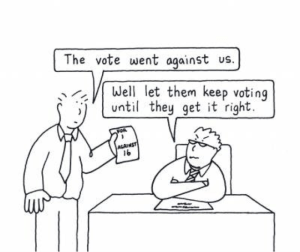 Nowhere was this more in evidence than the 2008 farce of Irish voters rejecting the Lisbon Treaty, only to be sent back to vote again after EU officials’ behind-doors deal to force a second referendum. Similar European Commission’s contempt for democratic majorities – and for democracy itself – has been seen in Denmark and France. For Brussels, ‘the people’ cannot be trusted and must be forced to vote again until they come up with the ‘right answer.’ This is dangerous stuff and reflects Bertholt Brecht’s sardonic comment on Communist elections: ‘Would it not be simpler, if the government simply dissolved the people and elected another?’
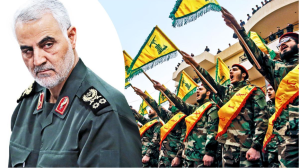 ‘The Assyrian came down like the wolf on the fold,’ wrote Lord Byron in his famous poem about the ancient Persians on the rampage. Well, the modern Persians are on the rampage now; and they are right on our doorstep.
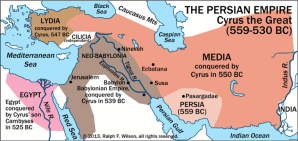 One of the mistakes Westerners make is thinking that the Middle East is run by Arabs: wrong. The Middle East is mainly split between Persians and Arabs; and they don’t get on – and never have. The ancient Persians were the bane of Greece and Rome; it wasn’t until the fanatical Arabian warriors of Islam conquered Persia in 651 that the Persians even became Muslim. To this day Persia – now calling itself Iran (after its Persian name) – is a separate culture, language and even a separate branch of Islam.
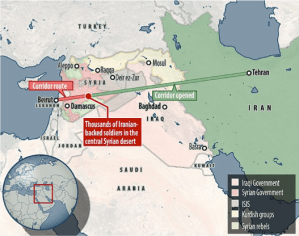 Iran’s efforts to expand its influence are there for all to see. Following the rout of ISIS by Kurdish infantry and American and Russian air power, Iran now controls large swathes of the Middle East, as well as dominating the governments in Baghdad and Damascus, whilst simultaneously intimidating the Gulf States. Through its use of proxy fighters like the Houthis in Yemen, Hezbollah in Lebanon and Hamas in Gaza, Tehran’s tentacles have now reached the Mediterranean. Iran is busy setting itself up as a regional superpower.
 For the second time in a month, to my surprise, I find myself agreeing with President Putin. Speaking at the International Economic Forum recently he warned: ‘We don’t need trade wars today … we need a comprehensive trade peace.’
 ‘So what?’ says the man in the Kyrenia café, ‘How do big economic problems affect me, my family and my bank account? Who cares?’
 John Hughes-Wilson