Our guest columnist

Living in the Turkish Republic of Northern Cyprus is an experience in itself and allows a view of events rarely – if at all – publicised in the UK press and media. This website will occasionally publish articles by Mr Stephen Day, an ex-Westminster MP who retired to the TRNC in 2006. These posts will offer a unique insight into the reality of life in an unrecognised country.
Stephen Day was the former Conservative MP for Cheadle, Cheshire (1987–2001) and Member of the Tory Whips Office. He successfully brought into law a Private Members Bill introducing the compulsory wearing of seat belts by children, consequently winning the Automobile Association silver medal for his contribution to road safety. Prior to Parliament he worked as a Sales Executive, as a Graduate Member of the Institute of Export. In 2006 he retired to North Cyprus and is currently President of the British Residents Society (BRS).
He has been a columnist for the Cyprus Today newspaper for the last 16 years.
Lefkoşa is the Turkish name for North Nicosia, the capital of the Turkish Republic of North Cyprus.
Stubborn stupidity
You would hope that an august organisation like the United Nations, might at last produce a Secretary–General capable of some original thought on the matter of Cyprus. Forget it. There’s as much chance of that as a resident of Lefkoşa being selected for the next crew of the International Space Station. In other words, none at all.
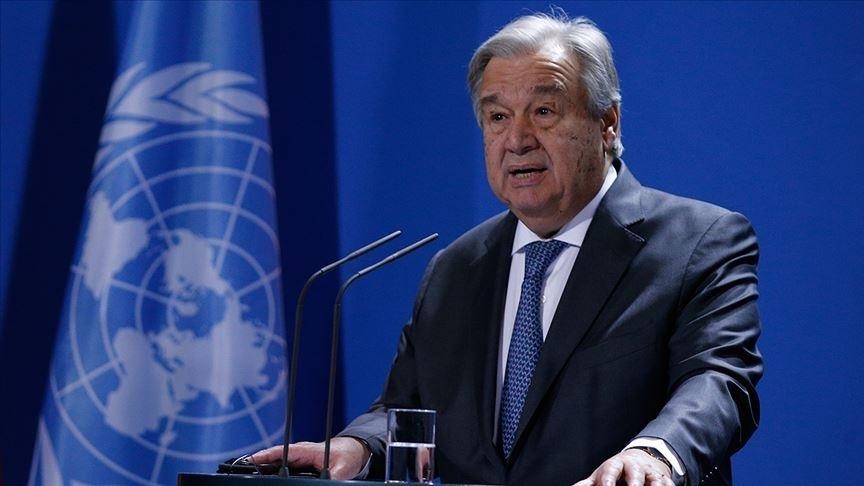
The latest ‘biannual report on Cyprus’ (Christmas, 2021), submitted to the UN Security Council by Secretary–General Antonio Guterres, is about as original as a forged Da Vinci masterpiece. It looks the same, but is worthless. In fact, the late, great, founding TRNC President, Rauf Denktaş, would have recognised every word – from 1983 onwards. The yawns of the Security Council must have been audible in far-off California, never mind in New York’s UN headquarters.
The Secretary–General is concerned that ‘the faltering economy of the TRNC and the passage of time without a settlement being reached are thwarting reconciliation efforts.’ Well, I never. Get away! For a statement of the blindingly obvious, you can’t beat that, now can you? To some extent, Guterres blames the impact of Covid for that ‘faltering economy’. Undoubtedly so, but isn’t there another important factor impacting on the TRNC? Like the UN’s never-ending enforced diplomatic and economic isolation of the North, for instance? How can you overlook the impact of that? You can’t. It’s what the Secretary–General proposes to do about it that staggers me. Something different? No chance – just more of the same old failure (the mind boggles at the extent of the inertia).
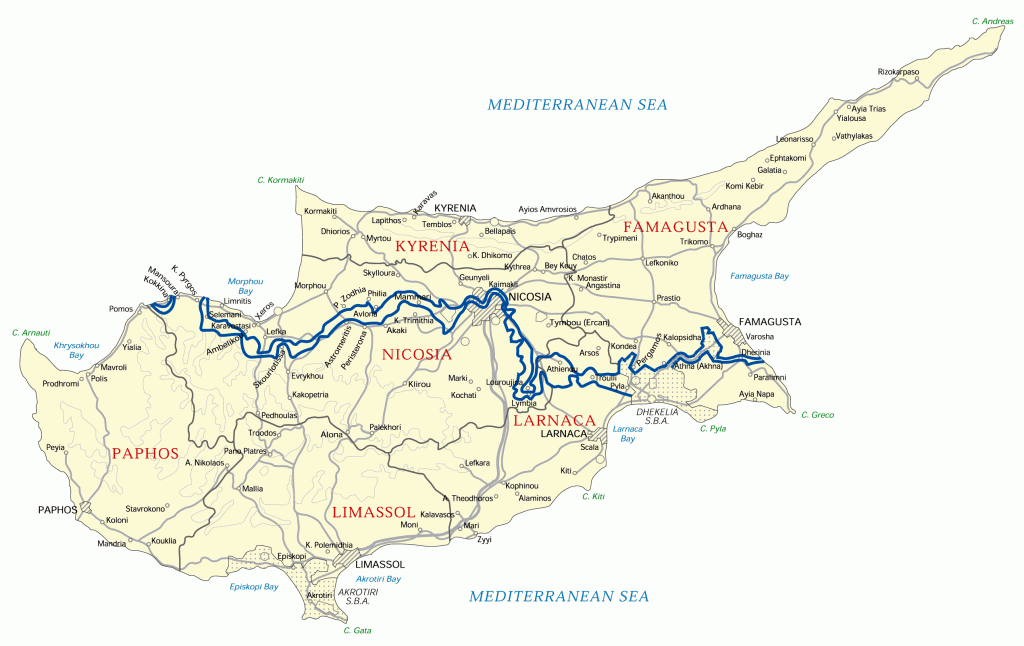
He went on to say that there is ‘a risk that the deepening of disparities between the two [Cypriot] economies may start eroding the basis for important convergences achieved in the past.’ Pardon? What convergences? The so called ‘Republic of Cyprus’ in south Cyprus is still the recognised ‘government of the whole of Cyprus’ (even though it isn’t) and the TRNC doesn’t exist! What kind of ‘convergence’ is that? And what’s all this ‘may start’ eroding convergence? The UN’s (and EU) stubborn stupidity in pursuing repeated failure began eroding the chance of a settlement decades ago. It still does and, if the Secretary–General has anything to do with it, it will continue to do so. Favouring one side with all the recognition and ignoring the existence of the other hardly smacks of even-handedness, now does it? Inviting the Greek–Cypriot President to address the UN General Assembly last year and failing to invite the Turkish–Cypriot President to do the same was a classic example of UN bias. What incentive does the favoured side have to concede anything? It doesn’t. That is why they don’t. The status quo suits the Greek part of Cyprus nicely.
If not achieving a settlement worries the Secretary–General, isn’t it about time that the UN started asking itself why? It should be as obvious as the wart on Oliver Cromwell’s face, Cyprus needs a radical UN rethink. We need a new UN vision, like treating both sides equally and recognising the obvious fact there are two states in Cyprus, not one.
This shouldn’t be too hard for the Secretary–General to comprehend. For instance, as one writer pointed out last week, ‘the UN supports and advocates the proposal for a two state solution for the Israeli/Palestine situation but rejects ratifying the two state solution in the island of Cyprus, where it actually exists’ [my italics]. Quite! That is amazing in itself – and it is even more incredible that the ‘Palestine’ bit of the equation is divided in itself, territorially and politically, between Hamas and Hezbollah. They are at each other’s throats. Not only that, but Hamas – a militant, so-called ‘Islamic’ terrorist group – rule that part of ‘Palestine’ called ‘the Gaza Strip’ and regularly fire missiles into Israel (Tel Aviv in particular). They receive Israeli retaliatory attacks in return as a consequence. In other words, in Palestine both the threat and the reality of violence exist on both sides.
How is it right that the UN is quite prepared to grant recognition to two peoples in conflict but not to a Cyprus at peace? There’s no armed conflict here. What message does that send? Chuck a few missiles and bombs around and we will recognise you? I’m sure the UN doesn’t intend that, but that is the consequential inadvertent reality of the UN’s differing attitudes to both disputes. If so, it is literally ‘bloody’ madness!
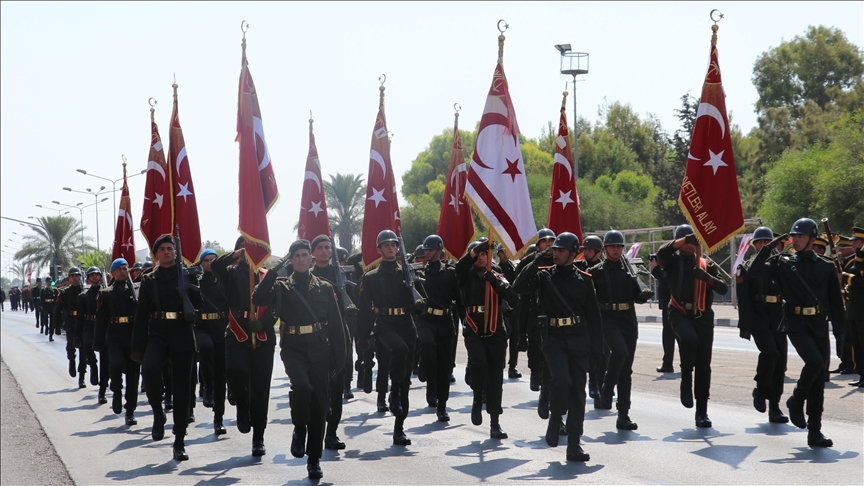
The UN stupidity goes further. They want Cyprus reunited but under Greek rule. They want Turkey out of the Cyprus equation – especially her troops, whose presence has really ensured fifty years of peace in Cyprus, not the presence of the UN. Everyone on Cyprus knows better than to mess with the Turkish Army. If those troops had not come here, it would have been a ‘Palestine plus’ scenario! Turkey could have taken the whole island. They didn’t. They simply saved the Turkish Cypriots from extinction. That is the reality. That is the truth. Before they came, civil war raged: ethnic cleansing to evict the Turks was rampant. Since when has putting two peoples back together again, who experienced such division and conflict, ever been a clever idea? Never, unless you happen to be the UN.
If Turkish Cypriots remain eternally isolated and treated as some sort of pariah who does the UN think they have to turn to? There is only one place that can help and it’s Turkey: the very opposite of what the UN claims it wants to achieve! Madness incarnate.
The Secretary–General readily identified the current lack of common ground between Cyprus’s two sides and ‘the deepening distrust, both between the two sides and among the two communities.’ He got that right, at least. He called on the leaders to ‘look to the future with pragmatism.’ Well, I never. If anybody is lacking in pragmatism and needs to ‘look to the future’ it’s the UN. For goodness sake, it is blindingly obvious that the UN position on Cyprus is untenable. It is not working. It never has worked. It never will. It has failed, failed and failed again, almost more times than the sun has set.
It’s time to accept there are two states, Mr. Guterres. There is no other way. Make history and recognise the facts. On the ground, sticking to the same old song is pointless. As things stand, so is the UN.
One day, someone in New York might realise it.
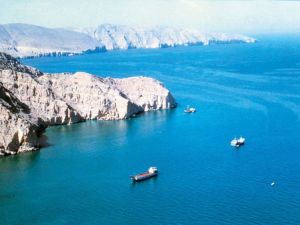 Well, it’s already started. The many wars in Syria, Lebanon, Iraq, Iran are beginning to come together into one single, bigger conflict. We are on the road to another war.
 Intelligence officers use a system called an ‘Indicators and Warnings board’ to monitor events and assess where they are heading. Essentially it is a list of key questions, listing the critical information requirements. Examples might be: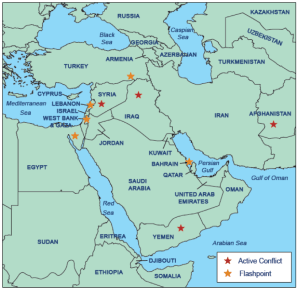
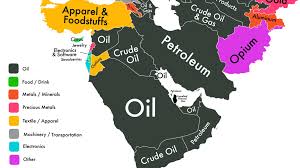 The USA has been willing to use its firepower in the past. It escorted ships here during the 1980s ‘Tanker War’. America fought its last naval battle in these waters against Iran in 1988. In July that year, the warship USS Vincennes even shot down an Iranian airliner, killing all 290 aboard, in what Washington said was an accident. Tehran said it was a deliberate attack.
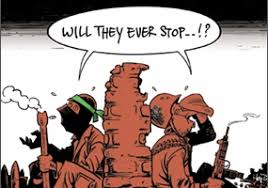 If this were not bad enough, everywhere you look in the Middle East there are many other dangerous flashpoints, many of them already the scene of fierce fighting. In Yemen, Sunni fights Shi’a (Saudi versus Iran), as the Houthis become part of Iran’s regional proxy warriors. On the Syrian border, Turkey is already busy fighting the Kurds. Gaza and the West Bank still simmer with anti-Israeli anger. Israel has already mobilised some reservists as a cornered Netanyahu looks for a grand gesture – probably a demonstration of Israel’s military might – to help him form a government after the recent elections.
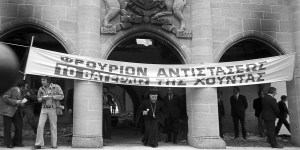 Everyone in Cyprus knows that the Turks intervened in Cyprus in July 1974. However, thanks to clever, well-funded and unremitting Greek propaganda, the world has been led to believe that this was nothing less than a brutal and uncalled-for invasion against the peace-loving Greeks – an Ottoman jackboot to seize Greek land and occupy Cyprus.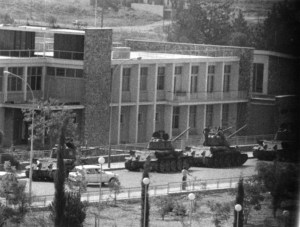
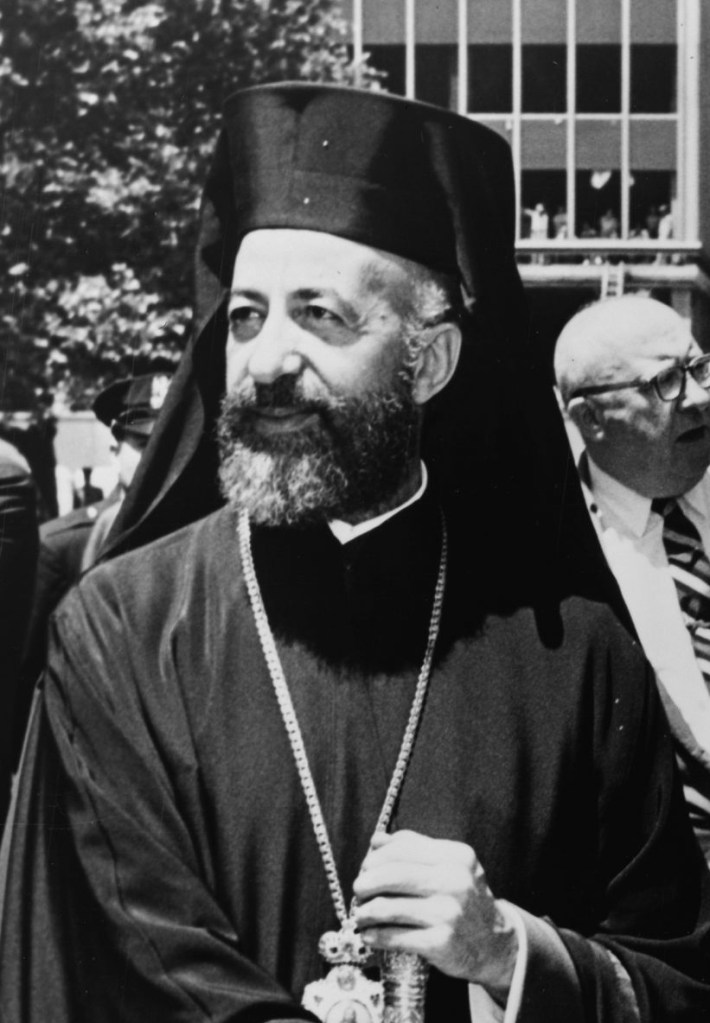
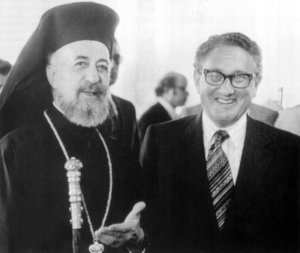 By 14 August the Geneva talks, aimed at a political solution, had broken down. Turkey’s demands for a bi-zonal federal state plus complete population transfer shocked Cyprus’ new acting President Glafcos Clerides, who begged for an adjournment in order to consult Athens and Greek-Cypriot politicians. The long shadow of the Machiavellian archbishop fell over the negotiating table, however. No one trusted Makarios, who was dissembling, lying and stalling to the last.
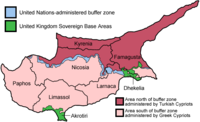 After three days of continuous advance and confused fighting it was all over. Cyprus was sliced in half. The two communities were ethnically separated. Thousands of refugees were displaced from their homes. The Greek Junta and their puppet Sampson went to jail. The UN’s temporary ceasefire still remains the legal position.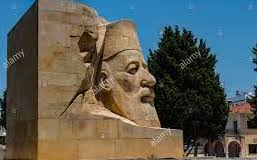
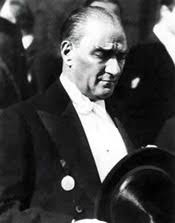 ‘Peace at home; peace in the world.’ Atatürk’s homely ambition has never been more important for Turkey. However, a number of crises are coming together inexorably to force Ankara to think long and hard about its future intentions. Turkey is at a major crossroads.
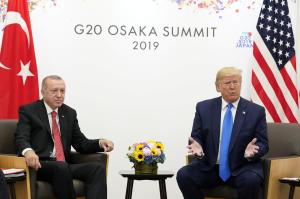 Then, in late June 2019 (in the margins of the G20 Osaka meeting), the Turkish president claimed that a deal had been struck. President Trump had told him there would be no sanctions over the Russian deal and that Turkey had been had been ‘treated unfairly’ over the move.
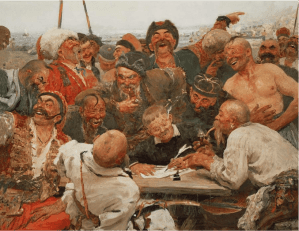 The problem is that Turkey and Russia have serious form going back to the days of the Tsars. For example, the Crimean War in the 1850s was really all about Russian and Turkish rivalry. Since the days of the Ottoman Empire, Turkey has always sought to deny Russia a significant presence to the south or in the eastern Mediterranean. But that is now where Russia is becoming increasingly active – especially in Syria. As Russian influence grows, Turkey’s room for regional influence shrinks. Turkey’s recent accommodation of Russia is therefore historically and geopolitically unusual.
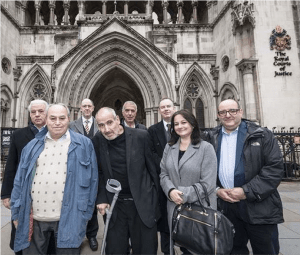 On 23 January 2019 the UK government reached an out-of-court settlement for £1 million for 33 elderly EOKA-era plaintiffs, who claimed they were tortured by British security services whilst being held in custody during the Cyprus Emergency (1955-9). All were arrested as terrorists by the British for their involvement with
 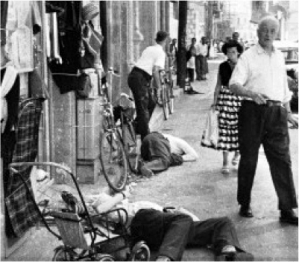 It pointed to the case of Nikos Sampson, the leader of EOKA’s Ledra Street murder gang, whose track record of cold-blooded murders of soldiers and civilians alike earned Nicosia’s main shopping street the nickname of ‘Murder Mile.’ However, Sampson’s well-justified conviction for murder was overturned on appeal by Judge Bernard Shaw, who ruled that Sampson’s confession was inadmissible as it had been made under duress. The smirking EOKA killer walked free from prison.
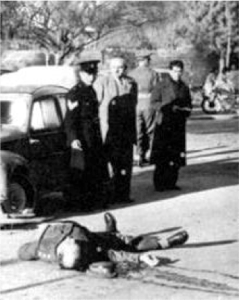 The truth is that the settlement with the EOKA-linked claimants is a one-sided affair. It represents a bargain for the UK, because it suppresses discussion in open court of any unpleasant facts. However it sets a precedent. The question now is, when will EOKA compensate the relatives of those Greek, Turk and British victims they murdered in cold blood? EOKA veterans openly boast of their murderous exploits; so who will be bringing a court case to sue those who gunned down a doctor like Surgeon-Captain Gordon Wilson, or defenceless women like Mrs Catherine Cutliffe, for their bloody deeds? The one-sided settlement with EOKA is an outrage, as it ignores far worse crimes admitted by the Greek-Cypriots’ EOKA killers.
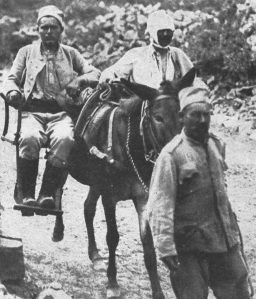 In 1914 Cyprus was a protectorate of the British Empire, leased by the Ottomans in 1878 to provide London with a base in the Eastern Mediterranean. This all changed in 1914 when, following a secret treaty between the Ottomans and Germany, the Ottoman Empire declared war against the Triple Entente powers of Great Britain, France and Russia. The British garrison promptly annexed the island on 5 November 1914.
 Nevertheless many Cypriots played an active part in the war. Thousands volunteered for the British army and they played an important part in the Salonika campaign. By 1916, the Military Commander of the British divisions on the Salonika front requested a Corps of Muleteers to help carry stores and supplies in the mountainous region of Macedonia.
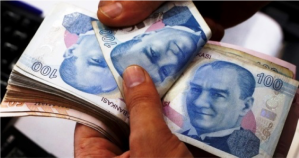 When Turkey sneezes, then the Turkish Republic of Northern Cyprus (TRNC) catches a cold. Nowhere is this more true than in the TRNC’s currency, the Turkish lira.
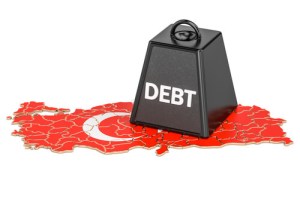 So what has gone wrong? The simple answer is that Turkey, having emerged from the global financial crisis of 2008-09, borrowed heavily in foreign currencies to fund its government’s programmes. With interest rates at an all-time low this made sense. Cheap foreign money could boost growth.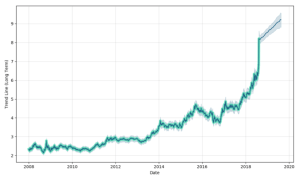

 John Hughes-Wilson