
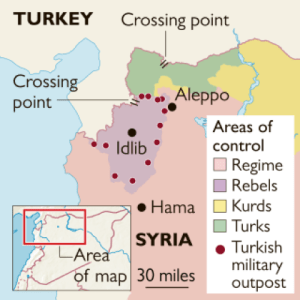
 Winston Churchill once famously said, ‘battles are the punctuation marks of history.’ Well, we have just avoided a potentially disastrous ‘exclamation mark’ in the bloody history of the Middle East. Whilst the post-colonial Versailles settlement of 1919 is being brutally readjusted to take account of the harsh realities of today’s Muslim world, a major crisis has just been avoided. At Russia’s Black Sea resort of Sochi, Turkey and Russia have agreed to form a joint, demilitarised buffer zone around Syria’s embattled north-western province bordering Turkey: Idlib.
This agreement defuses a growing crisis between Ankara and Moscow by preventing any major Russian-backed government offensive from exploding into ISIS’s final rebellious Syrian redoubt. However, significant obstacles remain; Idlib could still become a flash point.
The problem is that the Middle East is as much of an unexploded bomb today as Europe was in 1914. Sunni Saudi Arabia hates Iran, and Shi’a Iran loathes the Saudis. Shi’ite Assad’s remaining chunk of Syria is the close ally of Iran. Behind the Saudis stand the USA, Britain and France. Behind the Iranians stand the Russians, sometimes the Turks, ever keen to obliterate the Kurds, and perhaps China – and watching nervously from its ringside seat is Israel.
For the past ten years we have all been living with this savage struggle to the death. Muslim has been slaughtering Muslim, all in the name of the Prophet of the religion of Peace and Love – ‘May his name be blessed.’ Now this round is nearly over; or is it?
The Turkish-Russian Sochi deal has been welcomed by all sides as an opportunity to avert the suffering that any major offensive would inflict on the province’s 3 million civilians. UN Secretary-General António Guterres welcomed the agreement, saying that the ‘creation of a buffer zone in Syria’s rebel-held Idlib province should avert an all-out military assault and provide reprieve for millions of civilians.’
It would also avoid the heavy losses that would be incurred by government forces in launching the biggest battle yet of the Syrian war against the cornered rebels. Turkey, the UN and aid groups have warned that any major assault by Russian and government forces backing President Bashar al-Assad against the trapped rebel fighters would lead to a massacre. It could also send 800,000 new refugees fleeing across the border into an already overwhelmed Turkey.
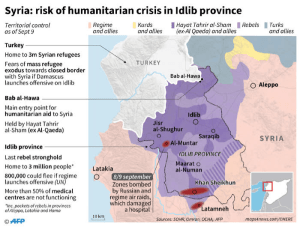 Many of the civilians in Idlib are already refugees from other parts of Syria following the collapse of the opposition resistance in cities such as Aleppo. The consequences of an all-out offensive against Idlib with its hapless civilians and the risk of Turkish troops fighting Russians could have led to a bloodbath.
The agreement is specifically designed to halt this major Russian-Syrian-Iranian attack on Idlib, with its trapped civilians. The agreement calls for a 9- to 12-mile demilitarised zone around the borders of the region, safe from Syrian and Russian air-force attack and which must be in place by 15 October. Heavy weapons including tanks, mortars and artillery will be withdrawn and Russian and Turkish troops will police the neutral zone. The Syrian government said that it ‘welcomed any initiative that stops bloodshed and contributes to security and stability.’ President Recep Tayyip Erdogan added, ‘With this memorandum of understanding, I believe we have prevented a major humanitarian crisis in Idlib.’
However, the devil is in the detail. The deal’s success hinges on the withdrawal of an estimated 10,000 fanatical jihadi rebel fighters from the buffer zone, fighting under the banner of Hayat Tahrir al-Sham (HTS), the Syrian franchise of al-Qaida and listed as dangerous terrorists by Russia, the USA and the UN.
These are some of Syria’s fiercest rebels, battle-hardened over years of gruelling warfare. HTS will fight to the death rather than surrender and they have good reason to do so: talks with the government have gone nowhere. In recently recaptured parts of the country, Assad’s goons have promptly arrested former rebels and opposition officials despite assurances of amnesty. Many have disappeared into Assad’s torture dungeons. ‘It’s either die, or surrender – and then die,’ says one rebel leader.
Despite these problems, Iranian Foreign Minister Mohammad Javad Zarif (a staunch supporter of Assad) tweeted: ‘Diplomacy works.’ However, he added that his visits to Turkey and Russia in recent weeks had achieved ‘a firm commitment to fight extremist terror.’ Putin himself added, ‘Russia and Turkey reiterated their commitment to continue anti-terrorism efforts in Syria in any of its forms or manifestations.’
Quite how this agreement to quarantine Idlib helps to stamp Islamic terrorism remains unclear because the deal is very fragile. With jets from at least six countries – Israel, Russia, Syria, Turkey, Britain and America – roaming the skies over Syria, the risk of mistakes leading to further escalation of the fighting are just a pilot’s blink away. Also, where will the rebels go?
Nevertheless, the international consequences of Sochi are important. Russia has scored a major diplomatic victory by striking a deal with Turkey. Moscow has avoided damaging its growing strategic relationship with Ankara, whilst achieving its own aims in Syria without more bloodshed. The Syrian war may be ending.
However, some things have not changed. ‘Russia doesn’t like the rebels and they want to help Assad lock down his victory; but they also have strong incentives to continue courting the Turks,’ said Aron Lund, an expert on the region. ‘Syria is just a small part of what Putin cares about. If he can just make the Syrian conflict quiet and unthreatening with Assad still in power, then Russia has won the war ….’
Idlib’s locals have mixed emotions about the Sochi deal. Abdulkafi Alhamdo, a 32-year-old teacher living in Idlib remains wary. ‘After seven years, if we trusted anyone we would be fools. Whenever we trust anyone they trick us,’ said Mr Alhamdo, who lived through the siege of Aleppo before fleeing to Idlib. He added that he was ‘so happy, and so sad’ about the deal, because it still leaves them in limbo. ‘People might be able to live again. Children might know there is tomorrow without planes. But we are still in nowhere. Refugees forever.’
Others have spotted the loopholes in the agreement. Thanassis Cambanis of The Century Foundation warns: ‘The gaping hole is that “terrorists” are still fair game. Putin has endorsed a lot of truces, but then Russia proceeded to bomb groups it defines as terrorists, because it says they weren’t part of the wider deal.’
This truce might be different. Putin’s own credibility is at stake, having made such a high-profile deal with President Erdogan. Turkey and Russia are increasingly becoming trade and diplomatic partners. Russia is building Turkey’s first nuclear reactor. The Kremlin also sees the strains between Turkey and western countries as a wonderful opportunity to divide and weaken the NATO alliance, to which Turkey provides the second largest number of troops. Putin has a personal stake in the Idlib agreement.
However, whilst for the Jihadis the battle may be lost, their long war is not over, because crushing ISIS in Syria will not eradicate the real problem. If the jihadis escape, the deadly spores of terrorism will merely disperse to spread their Islamist terrorism, which is already ‘global and growing.’ Islamist extremists caused 84,000 deaths in 2017 and intelligence agencies have identified 121 groups sharing a common ideology, now operating worldwide. They killed 84,000 people – nearly 22,000 of them civilians – in 66 countries in 2017, according to latest reports.
Even Whitehall admits that a convicted jihadi terrorist is being released onto the streets of Britain nearly every week. Home Office figures show that 46 prisoners held for terrorism offences were released in 2017 (The Telegraph, 13 September 2018)
ISIS and al Qa’ida are still very dangerous. Whatever happens in Idlib, we have not heard the last of them. The fallout from Syria will be with us for years.
 Algorithms rule your life. Really. I’ll also wager that most of us don’t have a clue what an algorithm is, or what it does. Most of us can’t even spell it.
 In the near future, something new and alarming will emerge. Tech pioneers are close to realising their dreams of creating human-like ‘artificial general intelligence’ (AGI): computers that don’t need programming, once they are up and running. Like
  Eighty years ago the science fiction writer Isaac Asimov foresaw these problems in his ground-breaking
  When Turkey sneezes, then the Turkish Republic of Northern Cyprus (TRNC) catches a cold. Nowhere is this more true than in the TRNC’s currency, the Turkish lira.
 So what has gone wrong? The simple answer is that Turkey, having emerged from the global financial crisis of 2008-09, borrowed heavily in foreign currencies to fund its government’s programmes. With interest rates at an all-time low this made sense. Cheap foreign money could boost growth.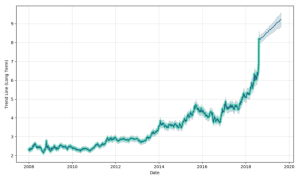

 The trouble with August is that the historical record shows that whilst everyone is on holiday it’s a great month to start a war.
 The threat is mortal. Tehran needs to sell its oil to survive. The lack of oil revenue could bankrupt Iran. The reaction to American threats from the regime was therefore predictable: Iranian President Hassan Rouhani promptly threatened to disrupt international oil shipments through the Persian Gulf if renewed US sanctions strangle Iran’s oil sales. ‘No one who really understands politics would say they will block Iran’s oil exports, and we have many straits, the Strait of Hormuz is just one of those …. We are the honest men who have throughout history guaranteed the safety of this region’s waterways. Do not play with the lion’s tail, it will bring regret.’
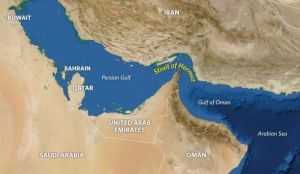 In turn, the Americans have warned Iran off. According to Washington, ‘Iran has threatened to close the Strait of Hormuz. They’ve done that in the past. They saw the international community put dozens of nations of the international community naval forces in for exercises to clear the straits. Clearly, this would be an attack on international shipping, and it would have, obviously, an international response to reopen the shipping lanes with whatever that took, because of the world’s economy depends on those energy supplies flowing out of there.’
 Here’s a riddle for you:
 For a start, in many cases, money as a traditional exchange of value is losing ground. Money is becoming much more a concept of ‘credit reassignment’ rather than a transfer of physical material. Everywhere today people are using credit and debit cards on a regular basis in everyday situations, such as shopping. These are cashless transactions. The question is, ‘What exactly is this cashless society?’ This leads to real impacts of living in a cashless world?
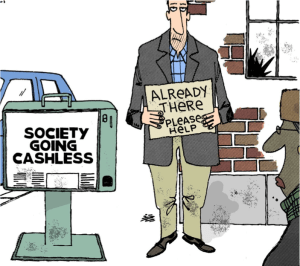 Moreover, there are some clear downsides to a cashless world. First, it will alienate a lot of people and put them on the fringe of society, if not make them outlaws. Not everyone has a smartphone, a bank account or even a permanent address.
 Sir Winston Churchill famously growled, ‘Democracy is the worst form of government – except for all the others.’
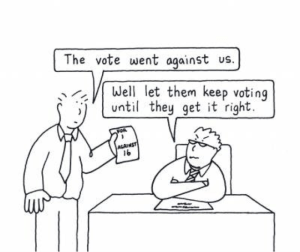 Nowhere was this more in evidence than the 2008 farce of Irish voters rejecting the Lisbon Treaty, only to be sent back to vote again after EU officials’ behind-doors deal to force a second referendum. Similar European Commission’s contempt for democratic majorities – and for democracy itself – has been seen in Denmark and France. For Brussels, ‘the people’ cannot be trusted and must be forced to vote again until they come up with the ‘right answer.’ This is dangerous stuff and reflects Bertholt Brecht’s sardonic comment on Communist elections: ‘Would it not be simpler, if the government simply dissolved the people and elected another?’
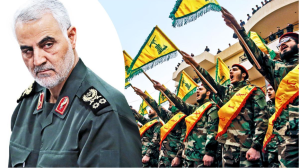 ‘The Assyrian came down like the wolf on the fold,’ wrote Lord Byron in his famous poem about the ancient Persians on the rampage. Well, the modern Persians are on the rampage now; and they are right on our doorstep.
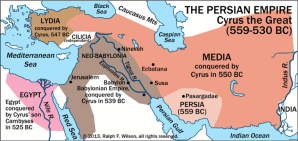 One of the mistakes Westerners make is thinking that the Middle East is run by Arabs: wrong. The Middle East is mainly split between Persians and Arabs; and they don’t get on – and never have. The ancient Persians were the bane of Greece and Rome; it wasn’t until the fanatical Arabian warriors of Islam conquered Persia in 651 that the Persians even became Muslim. To this day Persia – now calling itself Iran (after its Persian name) – is a separate culture, language and even a separate branch of Islam.
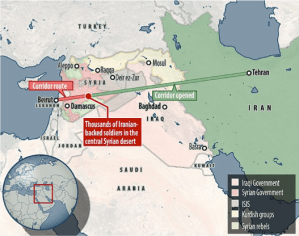 Iran’s efforts to expand its influence are there for all to see. Following the rout of ISIS by Kurdish infantry and American and Russian air power, Iran now controls large swathes of the Middle East, as well as dominating the governments in Baghdad and Damascus, whilst simultaneously intimidating the Gulf States. Through its use of proxy fighters like the Houthis in Yemen, Hezbollah in Lebanon and Hamas in Gaza, Tehran’s tentacles have now reached the Mediterranean. Iran is busy setting itself up as a regional superpower.
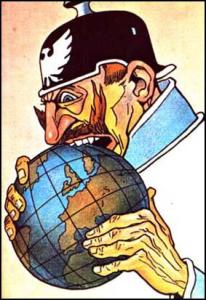 According to documents in the RAF Museum archive in France, 100 years ago tomorrow
  For the second time in a month, to my surprise, I find myself agreeing with President Putin. Speaking at the International Economic Forum recently he warned: ‘We don’t need trade wars today … we need a comprehensive trade peace.’
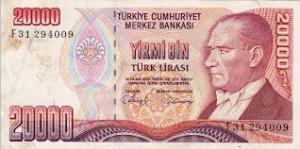 ‘So what?’ says the man in the Kyrenia café, ‘How do big economic problems affect me, my family and my bank account? Who cares?’
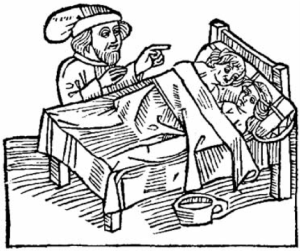 ‘Did the earth move for you, darling?’

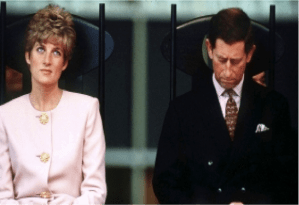 And everyone remembers the fairy tale wedding of the Prince of Wales and Lady Diana Spencer in 1981 ending in bitter estrangement, divorce and ultimately tragedy. Now Britain’s future king will be a divorcé. The gilded cage of royalty can destroy relationships just like any other.
 John Hughes-Wilson