
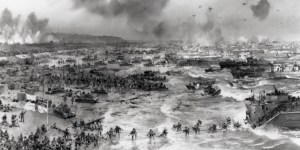
 The invasion of Normandy by Allied forces on 6 June 1944, was the Western Allies’ most critical operation of World War II.
By 1942 German armies had overrun most of Europe, North Africa and the western Soviet Union. They set up murderous police states and imprisoned million of people in the pursuit of implementing a policy of breeding a Germanic master race. With gas chambers and firing squads, Nazi Germany killed millions of Jews, Poles, Russians, homosexuals, gypsies, disabled people and others undesirable to the Nazi regime. If the attack, nicknamed ‘Operation Overlord’, had failed – and Hitler’s Wehrmacht had succeeded in pushing the invaders back into the sea – then world history would have been altered. ‘It’s hard to imagine what the consequences would have been had the Allies lost,’ says Timothy Rives, of the Eisenhower Presidential Library. ‘You could make the argument that they saved the world.’
Failure on D-Day would have freed Hitler to redeploy 20 more divisions, including eight Panzers, to meet the Red Army’s summer 1944 onslaught on the Eastern Front. The German generals would never have risked their 20 July bomb plot against a now victorious Führer and Germany’s V-weapons programme would have had the critical extra time it needed to produce thousands more new rockets and jet fighters. Many people forget that, even with D-Day and the Allied bombing offensive, German industrial production peaked in September 1944.
Also, as Andrew Roberts points out, if the Russians had overwhelmed the German armies in the East, nothing could have prevented the whole of Western Europe – perhaps even as far as Paris – falling to Joseph Stalin’s USSR.
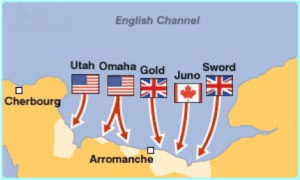 The 50 miles of Normandy coastline is therefore one of the most important battlefields of World War II. Today’s golden tourist beaches witnessed the start of one the most ambitious and historically important campaigns in human history. In its strategy and scope – and with its enormous stakes for the future of the free world – it was among the greatest military achievements ever. The Western Allies’ goal was simple and clear cut: to put an end to the Germany military machine and topple Adolf Hitler’s barbarous Nazi regime.
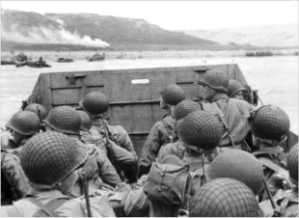 For the very old men of the surviving British, American and Canadian troops who spearheaded that assault at dawn on what one commentator called ‘the longest day’, this year’s anniversary was special. It will be their last big celebration of their victory, 75 years ago in the summer of 1944. Amid the beautiful French holiday countryside, one of the most critical struggles of the twentieth century took place. It was a struggle that would eventually end at the gates of Hitler’s Chancellery in Berlin on the last day of April 1945, as a demented and broken Hitler poisoned his dog and his mistress, before finally blowing his own brains out.
But D-Day nearly didn’t happen. The whole enterprise was delayed for 24 hours by bad weather and heavy seas. Having taken the momentous decision, on the night before the invasion Eisenhower drafted an ‘In case of failure’ note, to be published if necessary: ‘If any blame or fault attaches to the attempt, it is mine alone,’ he wrote. Like all professional soldiers, he knew that in the final analysis – assuming that his soldiers had weapons and would fight – only two factors are of paramount importance in war: intelligence and logistics.
On both counts the Allies triumphed. One of the biggest and most successful deception operations ever fed the German General Staff a brilliantly conceived and executed stream of false intelligence. From a phantom ‘4th Army’ in Scotland, preparing to invade Norway, to Patton’s massive ‘1st US Army Group’ in Kent, with its thousands of rubber tanks, fake landing craft and a mock oil depot across from the Pas de Calais at Dover, the Germans were completely fooled. In reality the busiest warriors were a few hundred Allied radio operators busy transmitting phoney signals to simulate non-existent armies’ radio traffic.
What is also often forgotten also is the staggering scale of the logistic back-up effort put in to ensure that the amphibious assault went well.
The statistics of all the materiel the Allies piled up on the beaches of southern England to support the invasion are mind blowing – not just in scale, but in attention to detail. All over southern England massive new ammo and supply dumps mushroomed. Millions of tons of stores, 100,000 vehicles and 250,000 men piled into the Channel coast bases in the spring of 1944. One of those supply units alone piled up 3 500 tons of soap, which Eisenhower insisted went to France so that his soldiers could take baths.
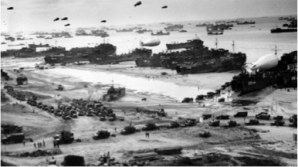 ‘Ike’ had 3 million troops under his command; what they all devoured in just one day was stupendous. According to historian Rick Atkinson, US commanders had ‘calculated daily combat consumption, from fuel to bullets to chewing gum, at 41,298 pounds per soldier. Sixty million K-rations, enough to feed the invaders for a month, were packed in 500-ton bales.’
With his experiences of the Somme and Gallipoli, Churchill was deeply pessimistic about casualties. There is ample evidence that he harboured grave misgivings about the whole enterprise. The US Chiefs of Staff were having none of it. They insisted that casualty evacuation was given particular attention. Many of the ships headed across the channel for France, had no soldiers on board. Instead, they carried some 30,000 stretchers, 96,000 blankets and tons of supplies – blood, dressings, splints, plasma, beds, to name a few – for the assault troops that would land at Normandy.
Once ashore, a sophisticated and well-organised system of field hospitals swung into action. Medics on the beach applied basic first aid as they sorted the casualties. The ‘transportable wounded’ were embarked on to the very ships that had carried the blankets that now covered them. Across the channel they were loaded on to trains for the 150 American-built hospitals across southern England. This was the medical staffs’ vital contribution: to save lives, none more so than the forward Casualty Clearing Stations and mobile Field Hospitals as the battle plunged further into France. ‘Doctors and nurses, often working 14-hour-long shifts, consider this time as their actual battle participation,’ one medical official wrote.
Except for the difficulties on Omaha Beach – when the Americans launched their swimming tanks too far out, where they were swamped by the waves – casualties were surprisingly light, considering the perils of any frontal assault. Although German machine-gunners hit Allied soldiers hard as they came ashore from their landing craft, the Montgomery’s attack plan (in his role as Land Forces Commander) overwhelmed them, as 160,000 assault troops, 12,000 aircraft and 200,000 sailors manning 7000 vessels first blasted the defenders, then stormed the beaches.
The eight assault divisions suffered 12,000 killed, wounded and missing. The Americans lost 8230, with 2400 casualties at Omaha alone. On the other beaches casualties were surprisingly light; at Utah, the US lost only 197 men. Thanks to the firepower of their swimming tanks and other ‘funnies’ the British and Canadians had only 3000 casualties. Although no major French units took part in the invasion, many French civilians were killed, mostly by Allied bombs or shell fire. Some injured citizens were reduced to disinfecting their wounds with calvados, the local apple brandy.
By dawn on 7 June the Allies were safely ashore, dug in and there to stay. German counter attacks had been repulsed. Supplies and fresh reinforcements were flooding in and the bridgehead was expanding. As the Allied soldiers marched inland from the beaches, the delighted French cheered, many of them giving flowers to the soldiers. The success of D-Day changed the course of history for ever.
That is why President Johnson’s tart reply to de Gaulle in 1966, when the arrogant French leader demanded that all US troops leave France immediately, still hits home: ‘What? Including all the ones in your cemeteries?’
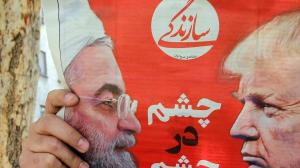 Here we go again. Even as you read this, the war drums are beating. And – surprise, surprise – it’s Iran that’s at the heart of this latest eruption of trouble in the Middle East.
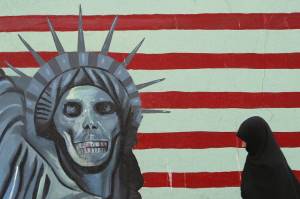 The 1979 revolution created strong passions in both countries. In Iran it was a glow of triumphalism over ‘The Great Satan’; and in the USA a simmering resentment at what was seen as a national humiliation. Few episodes in living memory, other than the sight of Royal Marines surrendering to Argentine invaders in 1982, show how public emotion can drive political decisions.
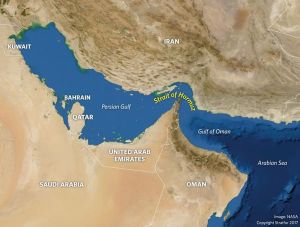 Satellites report Iran moving S-300 SAMs and massing armed fast gunboats in the Gulf. Their role would be to swarm out and attack American and Western shipping in the Strait of Hormuz, through which much of the world’s oil supplies pass.
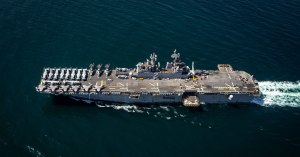 In response to these rising tensions, Washington has upped the ante, flying B-52 bombers into the region and moving a nuclear equipped carrier task force with 80 aircraft, accompanied by a Marine Expeditionary Force, to the Gulf. The objective of the exercise, in the words of national security adviser, is to ‘send a message’ to Iran. Donald Trump’s tweet spells out the threat implicitly: ‘If Iran wants to fight, that will be the official end of Iran.’
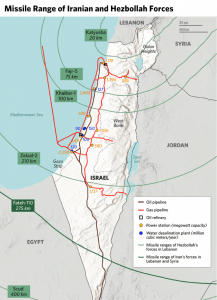
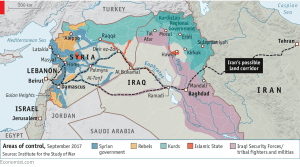 Tehran has significantly expanded its footprint over the past decade, making powerful allies across the Middle East as it forges its ‘Land Bridge’ west to the Mediterranean. The IRGC’s Quds Force controls up to 140,000 Shia fighters across Syria, many dug in on Israel’s border. Quds has close links to Hezbollah, Lebanon’s well-armed anti-Israel military organisation, part of Iran’s ‘axis of resistance’, armed groups with tens of thousands of Shi’ite Muslim fighters backing Tehran. In Gaza, Iran supports Palestinian Islamic Jihad in its struggle against what Tehran calls the ‘Zionist enemy’. Further south in Yemen, the insurrectionary Houthi rebels are openly fighting Iran’s enemy, Saudi Arabia.
 Just like the tip-off which led to the
  There is no doubt that Huawei has serious form over collecting secret intelligence and mis-using its computer hardware.
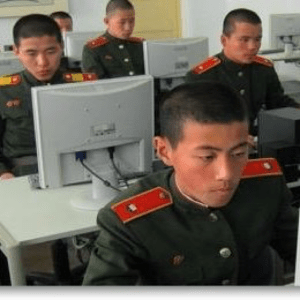 Worse, Huawei works directly for the Chinese government. Last December their Chief Financial Officer,
  The USA means business. The
  The
The 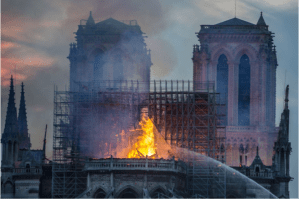 Europe faces a major problem with its restive Muslim population. Like it or not, we seem to be in the middle of a war with echoes of the religious wars of the Crusades and the bloody strife between Protestants and Catholics that tore Europe apart between 1550 and 1650.
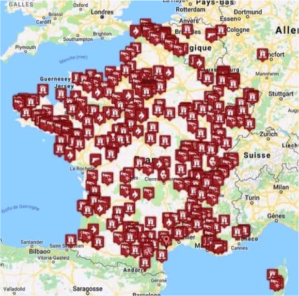 The fire at Notre-Dame is actually part of a clear pattern of attacks. Three years ago a ‘commando unit’ of jihadis tried to destroy the cathedral by detonating cylinders of natural gas. Three days before the Notre-Dame fire, Ines Madani (a convert to Islam) was sentenced to eight years in prison for recruiting a French ISIS terrorist group. The Notre-Dame fire also occurred during a period in which 800 churches have been attacked in France in 2018.
 If the Notre-Dame fire really was an accident, there is no explanation of how it started. Benjamin Mouton, Notre-Dame’s former chief architect, pointed out that no electric cable or appliance, and no source of heat, could be placed in the attic – by law. However, the fire spread so quickly that the firefighters who rushed to the spot as soon as they could were shocked. Remi Fromont, architect of the French Historical Monuments said: ‘That fire could not start from any element present where it started. A major heat source is necessary to launch such a disaster.’
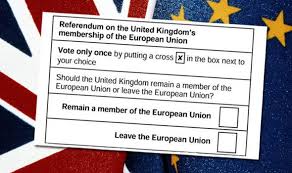 The only constant in life is change. If anything proves the truth of this saying, it is British politics. Although many regard the recent chaotic shambles, barefaced lies and back-stabbing intrigue of Brexit as a sure sign of the weakness of the British political system, it is not. It is a shambolic yet important example of the very real strengths of Britain’s unwritten constitution.
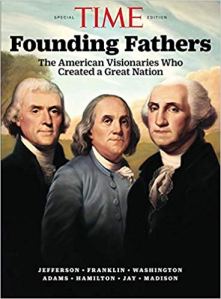 For example, what exactly did the famous Founding Fathers of the United States of America come up with 232 years ago in their famous 1787 written Constitution on contentious subjects like abortion, slavery and the latest – the 27th Amendment – which prohibits laws on ‘delaying new Congressional salaries from taking effect until after the next election of Congress’? In the British context, would MPs’ salaries really require an amendment to a national constitution?
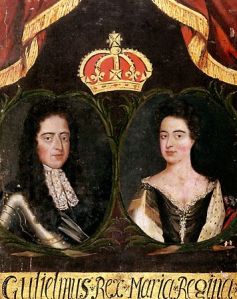 The ‘Glorious Revolution’ of 1688, when Parliament kicked out the last Stuart King and invited a foreigner to reign, can be seen as the root of today’s modern constitution. The 1689 Bill of Rights is still the bedrock, even today, of the UK’s constitutional arrangements. That Act settled the primacy of Parliament over the monarch, providing for the regular meeting of Parliament, free elections to the Commons, free speech in parliamentary debates, and some basic human rights, such as freedom from ‘cruel or unusual punishment’. It also sets out the need for ‘the Crown’ to seek the consent of the people, ‘as represented in Parliament’.
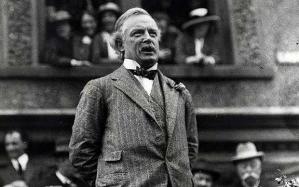 If we go back to 1911 there is an earlier revolutionary change in British politics, which was swiftly resolved by an unwritten constitution enshrined in laws. When the House of Lords’ rejected Chancellor of the Exchequer, David Lloyd George’s ‘
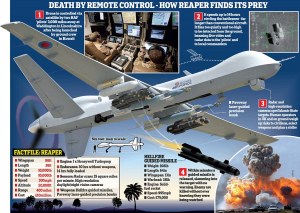 Like many others, I was surprised by the announcement by Air Chief Marshal Sir Stephen Hillier, Chief of the Air Staff, that his Reaper drone crews will be eligible for the new Operational Service Medal for their contribution to the war in Syria and the defeat of ISIS (also known as Daesh). Traditionally, medals have always been awarded based on risk and rigour. It may seem a reasonable assumption that there is not much risk sitting in a nice warm office up at RAF Waddington in Lincolnshire where they operate their Unmanned Air Vehicles (UAVs). More like playing computer games, perhaps? Where is the risk and rigour in that?
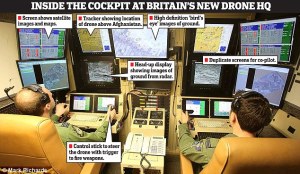 During the campaign to destroy the extremists in Iraq and Syria, drones were used to carry out strikes, gather intelligence and conduct surveillance. While front-line operational aircrew do operations for maybe six months or a year at a time, drone operations staff face different challenges The Reaper force is on duty 24/7/365, monitoring an enemy that is elusive, dangerous and determined to attack the West in any way it can in pursuit of its twisted, fanatical world view. The personal strain and pressure watching the every move of these individuals is immense and unrelenting.
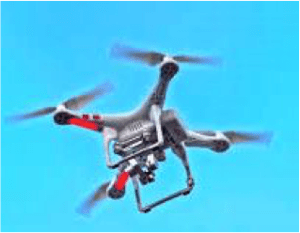 This insight into the combat stress of the new warfare is a reflection of how in the last decade drones have become a new battlefield in the ‘vertical flank’. As long ago as 2004, the militant group Hezbollah began to use ‘adapted commercially available hobby systems for combat roles’. These modified toys can be bought easily, as the Gatwick debacle in December 2018 demonstrated, and – at prices ranges from US $200 to $700 – they are as cheap as chips to the military.
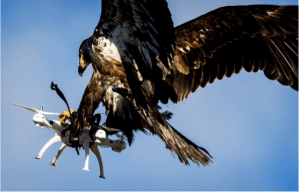 ‘As drones become deadlier, stealthier, faster, smaller and cheaper, the nuisance and threat posed by them is expected to increase, ranging from national security to individual privacy,’ Grand View warns. ‘Keeping the above-mentioned threat in mind, there are significant efforts – both in terms of money and time – being invested in the development and manufacturing of anti-drone technologies.’ The Dutch have even trained eagles to attack drones.
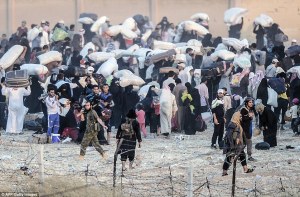 So ISIS – or Daesh (‘one who crushes something underfoot’) as the Arabs call it – is finally defeated. Like trapped rats, the last jihadi fanatics hide in their final boltholes to await their inevitable doom at the hands of the Kurds, Turk, and Syrian armies – helped by the US, Russian and UK’s Royal Air Force – all closing in for the kill. Thousands of men, women and children have fled ISIS’s surrounded final stronghold in the village of Baghuz, on the Iraqi border, surrendering to the Syrian Democratic Forces (SDF), and the Kurdish-led militias backed by the West. The women and children seen streaming into squalid desert refugee camps to be told what the future holds for the families of the broken terrorist army are the tangible evidence of defeat.
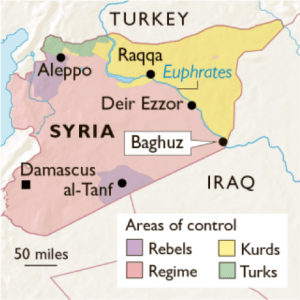 No one sees this more clearly than General Joseph Votel, who is in charge of US operations in the Middle East. In evidence to the US Congress’s House Armed Services Committee hearing on 7 March 2019, he shared evidence that although Daesh militants are losing the last of their territory in Syria, the militants who remain represent a ‘serious generational problem’. He told the hearing: ‘We will need to maintain a vigilant offensive against this now widely dispersed and disaggregated organization. Reduction of the physical caliphate is a monumental military accomplishment – but the fight against ISIS and violent extremism is far from over and our mission remains the same.’ The general also warned of more trouble ahead: ‘The Isis population being evacuated from the remaining vestiges of the caliphate largely remains unrepentant, unbroken and radicalised.’
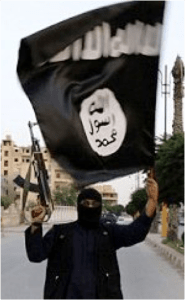 One 60-year-old woman, who did not want to be named, said that ISIS will continue because the ‘Caliphate’s Cubs’ under the terror group’s rule have been trained to fight from a young age. She said: ‘The caliphate will not end, because it has been ingrained in the hearts and brains of the newborns and the little ones.’ Some of the civilians threw rocks at the cameras of those trying to film them, whilst one screamed at a photographer and called him a pig.
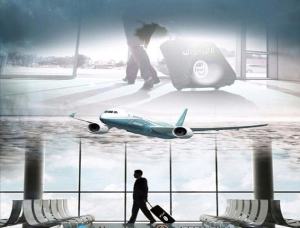 Already there are ISIS propaganda posters encouraging new attacks, including one depicting a man walking through an airport dragging a suitcase depicting the terror group’s logo. We have seen similar Islamist terror posters in the past, often using images of major Western cities such as New York and London as part of their scare tactics. To further strengthen the case that ISIS is going to ground but still remaining active, monitoring agencies report that known ISIS sympathisers are sharing encrypted messaging apps such as Telegram to ‘inspire’ extremists to carry out terror attacks. This follows reports that desperate ISIS-linked media groups are calling for a new ‘online jihad’ now that the terrorists have been neutralised in Syria and Iraq.
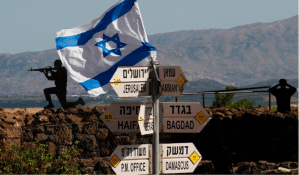 The Roman poet, Horace, once observed, ‘when your neighbour’s house is on fire, you should worry.’ It now looks as whole Middle East could catch fire, because the embers of the Syrian civil war have morphed into something much more dangerous, risking setting off a major new war between Israel and Iran.
 The problem goes back to 1979 when Iran deposed the US-backed Shah, America’s closest ally in the Middle East. However, Iranians soon found that they had swapped one dictator for another, the Shi’ite religious fanatic Ayatollah Khomeini. His battle cry was ‘Death to Israel, Death to America.’ Since then, Khomeini’s Islamic Revolution has had far-reaching consequences for Iran and for the Middle East. Tehran is now wedded to violent anti-Western policies, international terrorism, crushing internal dissent and exporting their Shi’ite version of revolution.
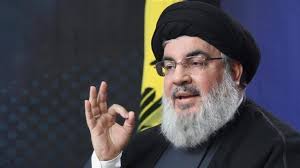 Emboldened by Iran’s protective umbrella, speaking at a rally marking the 40th anniversary of Iran’s Islamic Revolution and the overthrow of the Shah, Hezbollah’s leader (Hassan Nasrallah) warned that Lebanon would ‘defend Iran in the event of war,’ and ‘if America launches war on Iran, it will not be alone in the confrontation, because the fate of our region is tied to the Islamic Republic’.
 Rouhani also vowed Iran would defeat harsh US sanctions, re-imposed after President Donald Trump withdrew from Tehran’s nuclear accord with world powers last year. Meanwhile Iran’s secret drive to acquire nuclear weapons continues apace.
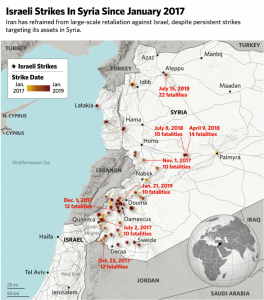 In May 2018 Iranian forces fired 50 rockets and mortars into the Golan Heights. This barrage did not inflict a single casualty and caused negligible damage. Israel’s prompt response was airstrikes hitting more than 70 targets. With those strikes, Israel demonstrated its ability to retaliate, warning Iran that attacking Israel would only invite an even more forceful reply. Iran backed down. Its limited capabilities in Syria makes Tehran nervous of any escalation – for now. Israel has a significant military advantage, enjoying overwhelming air superiority that can kill Iranian forces and destroy their equipment.
 The danger is that any escalation from Iran could spark a major escalation of fighting, which in turn would be met almost certainly with an overwhelming Israeli response in Lebanon and Iraq. Israeli Prime Minister Netanyahu spells out the consequences: ‘Whoever tries to hurt us, we will hurt them. Whoever threatens to destroy us will bear the full responsibility.’
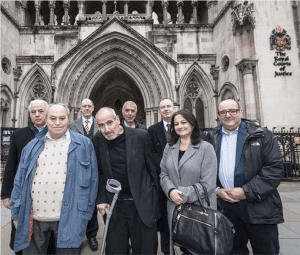 On 23 January 2019 the UK government reached an out-of-court settlement for £1 million for 33 elderly EOKA-era plaintiffs, who claimed they were tortured by British security services whilst being held in custody during the Cyprus Emergency (1955-9). All were arrested as terrorists by the British for their involvement with
 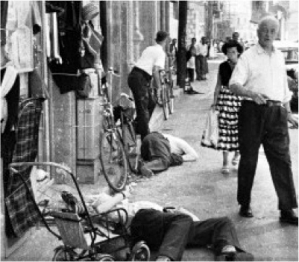 It pointed to the case of Nikos Sampson, the leader of EOKA’s Ledra Street murder gang, whose track record of cold-blooded murders of soldiers and civilians alike earned Nicosia’s main shopping street the nickname of ‘Murder Mile.’ However, Sampson’s well-justified conviction for murder was overturned on appeal by Judge Bernard Shaw, who ruled that Sampson’s confession was inadmissible as it had been made under duress. The smirking EOKA killer walked free from prison.
 The truth is that the settlement with the EOKA-linked claimants is a one-sided affair. It represents a bargain for the UK, because it suppresses discussion in open court of any unpleasant facts. However it sets a precedent. The question now is, when will EOKA compensate the relatives of those Greek, Turk and British victims they murdered in cold blood? EOKA veterans openly boast of their murderous exploits; so who will be bringing a court case to sue those who gunned down a doctor like Surgeon-Captain Gordon Wilson, or defenceless women like Mrs Catherine Cutliffe, for their bloody deeds? The one-sided settlement with EOKA is an outrage, as it ignores far worse crimes admitted by the Greek-Cypriots’ EOKA killers.
 John Hughes-Wilson