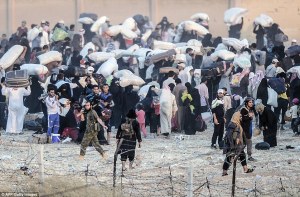
 So ISIS – or Daesh (‘one who crushes something underfoot’) as the Arabs call it – is finally defeated. Like trapped rats, the last jihadi fanatics hide in their final boltholes to await their inevitable doom at the hands of the Kurds, Turk, and Syrian armies – helped by the US, Russian and UK’s Royal Air Force – all closing in for the kill. Thousands of men, women and children have fled ISIS’s surrounded final stronghold in the village of Baghuz, on the Iraqi border, surrendering to the Syrian Democratic Forces (SDF), and the Kurdish-led militias backed by the West. The women and children seen streaming into squalid desert refugee camps to be told what the future holds for the families of the broken terrorist army are the tangible evidence of defeat.
The war is over and everyone can come home … er, well, no … it isn’t, actually.
If you tread on a poisonous mushroom it explodes to scatter its thousands of spores throughout the woods. So it is with ISIS, because group was never just a ragtime army of Islamic hotheads living on captured land. ISIS is much more: it is an ideology that cannot be crushed and exterminated with bullets rockets and bombs. Ideas are spread like spores. Defeat on the battlefield has had the effect of scattering the survivors of the army of the faithful throughout the Middle East – and far beyond. The battle is won, but the war will go on.
This time it will be a war based on two separate but linked campaigns. First is the need to keep the flame of Islamic purity and the search for God’s kingdom of the Ummat al-Islām ( أمة الإسلام ), the collective community of Islam, alive to carry the Holy Gospel of the sacred Koran far afield. Second, the ISIS survivors now on the run are planning a bitter revenge on the West and all those infidels who have destroyed their dream of an ideologically pure Muslim Caliphate.
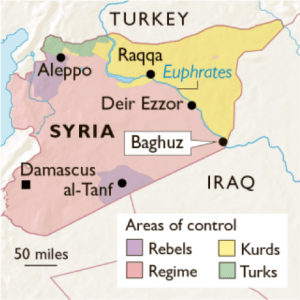 No one sees this more clearly than General Joseph Votel, who is in charge of US operations in the Middle East. In evidence to the US Congress’s House Armed Services Committee hearing on 7 March 2019, he shared evidence that although Daesh militants are losing the last of their territory in Syria, the militants who remain represent a ‘serious generational problem’. He told the hearing: ‘We will need to maintain a vigilant offensive against this now widely dispersed and disaggregated organization. Reduction of the physical caliphate is a monumental military accomplishment – but the fight against ISIS and violent extremism is far from over and our mission remains the same.’ The general also warned of more trouble ahead: ‘The Isis population being evacuated from the remaining vestiges of the caliphate largely remains unrepentant, unbroken and radicalised.’
General Votel is right. Those who have held out until now are still defiant. What we are seeing now is not the surrender of ISIS as an organisation, but a calculated decision to preserve the safety of their families and going to ground in remote areas to wait for the right time to re-emerge to carry on the fight elsewhere.
Many of the women have told reporters they are unrepentant in their support for ISIS and have pledged to continue the struggle. Women in camps for the displaced have even reported attempts to maintain ISIS discipline there, with unveiled women being attacked by other ‘ISIS brides’.
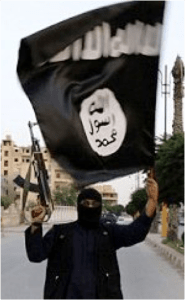 One 60-year-old woman, who did not want to be named, said that ISIS will continue because the ‘Caliphate’s Cubs’ under the terror group’s rule have been trained to fight from a young age. She said: ‘The caliphate will not end, because it has been ingrained in the hearts and brains of the newborns and the little ones.’ Some of the civilians threw rocks at the cameras of those trying to film them, whilst one screamed at a photographer and called him a pig.
The captured fighters on the other hand have kept their heads down. Most have been taken to Kurdish and Syrian detention camps. Their fate remains unclear, especially the many hundreds of foreign fighters whose home countries are reluctant to take them back. They are an international hot potato for whom – understandably – no one wants to take responsibility.
The real danger now is that ISIS supporters are being urged to launch lone-wolf terror attacks on Western targets, according to their message traffic. The organisation still has the wherewithal to fight. A UN report published last month claimed ISIS has a secret war chest of up to $300 million (£230 million) that could be used to sustain its operations and fund new attacks on the West. Although the terror group is assessed to have ‘bulk stored’ some of the money in its stronghold area (leading to one spectacular USAF strike on a warehouse that literally blew millions of dollars up into the sky), much of the rest has been smuggled abroad or invested in legitimate businesses. So, not only does ISIS still have an army of sympathisers on which to call, it also has plenty of cash to fund any future operations.
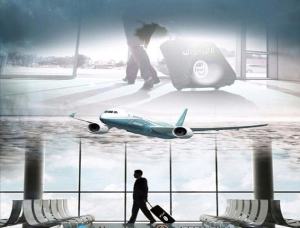 Already there are ISIS propaganda posters encouraging new attacks, including one depicting a man walking through an airport dragging a suitcase depicting the terror group’s logo. We have seen similar Islamist terror posters in the past, often using images of major Western cities such as New York and London as part of their scare tactics. To further strengthen the case that ISIS is going to ground but still remaining active, monitoring agencies report that known ISIS sympathisers are sharing encrypted messaging apps such as Telegram to ‘inspire’ extremists to carry out terror attacks. This follows reports that desperate ISIS-linked media groups are calling for a new ‘online jihad’ now that the terrorists have been neutralised in Syria and Iraq.
The problem is that, like Communism, jihadism is a global phenomenon. History has shown us the dangers of underestimating the power of ideologies. In places like Iraq, Somalia, Nigeria, Afghanistan, Mali and Yemen, fundamental Islam is still prepared to fight and die for the cause, as al-Qaeda still demonstrates. One of the jihadi’s key mantras is ‘stay and expand’. This philosophy and a willingness to accept heavy casualties whilst planning for a long struggle are rooted in a firm belief that God favours their cause and sometimes tests the faithful so that only the purest at heart will survive to fight and win the ultimate battle. Such a mindset makes for a dangerous adversary, whatever its losses.
There is also growing evidence that the group’s surviving leadership have moved to disperse some of their fighters, arms and riches, preparing ISIS to resume terrorist and insurgent operations after the caliphate’s collapse. This campaign has already started in Iraq, where Islamic State is again conducting assassinations, bombings and other operations despite having lost control of vast territories. Given the way Syria is currently partitioned, the various political vacuums in the region are already giving fleeing ISIS State militants time and space to regroup and set up new operations.
The bitter truth is that Islamic State is just one branch of a global insurgency, a problem the world cannot solve by just killing and bombing one single nest of vipers. Combatting a global insurgency will require a coordinated global counterinsurgency effort. This means that efforts to defeat jihadist groups must persist well after the ‘clear’ phase to the ‘hold’ and ‘build’ phases of counterinsurgency. In addition, this must happen in every part of the world where the jihadist insurgency is manifesting itself, from Bali to Birmingham.
Of one thing we can be sure. The erasure of the Islamic State’s caliphate in Syria won’t ensure its final defeat. The war goes on ….
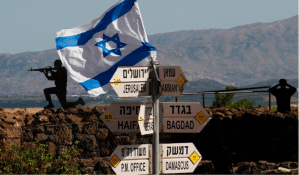 The Roman poet, Horace, once observed, ‘when your neighbour’s house is on fire, you should worry.’ It now looks as whole Middle East could catch fire, because the embers of the Syrian civil war have morphed into something much more dangerous, risking setting off a major new war between Israel and Iran.
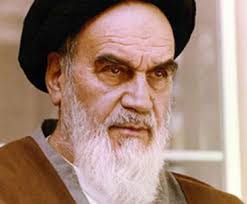 The problem goes back to 1979 when Iran deposed the US-backed Shah, America’s closest ally in the Middle East. However, Iranians soon found that they had swapped one dictator for another, the Shi’ite religious fanatic Ayatollah Khomeini. His battle cry was ‘Death to Israel, Death to America.’ Since then, Khomeini’s Islamic Revolution has had far-reaching consequences for Iran and for the Middle East. Tehran is now wedded to violent anti-Western policies, international terrorism, crushing internal dissent and exporting their Shi’ite version of revolution.
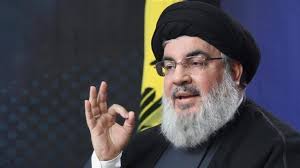 Emboldened by Iran’s protective umbrella, speaking at a rally marking the 40th anniversary of Iran’s Islamic Revolution and the overthrow of the Shah, Hezbollah’s leader (Hassan Nasrallah) warned that Lebanon would ‘defend Iran in the event of war,’ and ‘if America launches war on Iran, it will not be alone in the confrontation, because the fate of our region is tied to the Islamic Republic’.
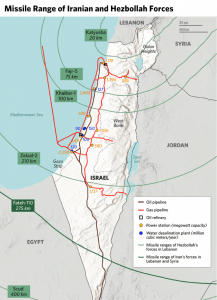 Rouhani also vowed Iran would defeat harsh US sanctions, re-imposed after President Donald Trump withdrew from Tehran’s nuclear accord with world powers last year. Meanwhile Iran’s secret drive to acquire nuclear weapons continues apace.
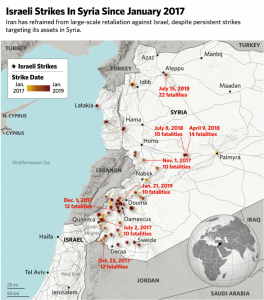 In May 2018 Iranian forces fired 50 rockets and mortars into the Golan Heights. This barrage did not inflict a single casualty and caused negligible damage. Israel’s prompt response was airstrikes hitting more than 70 targets. With those strikes, Israel demonstrated its ability to retaliate, warning Iran that attacking Israel would only invite an even more forceful reply. Iran backed down. Its limited capabilities in Syria makes Tehran nervous of any escalation – for now. Israel has a significant military advantage, enjoying overwhelming air superiority that can kill Iranian forces and destroy their equipment.
 The danger is that any escalation from Iran could spark a major escalation of fighting, which in turn would be met almost certainly with an overwhelming Israeli response in Lebanon and Iraq. Israeli Prime Minister Netanyahu spells out the consequences: ‘Whoever tries to hurt us, we will hurt them. Whoever threatens to destroy us will bear the full responsibility.’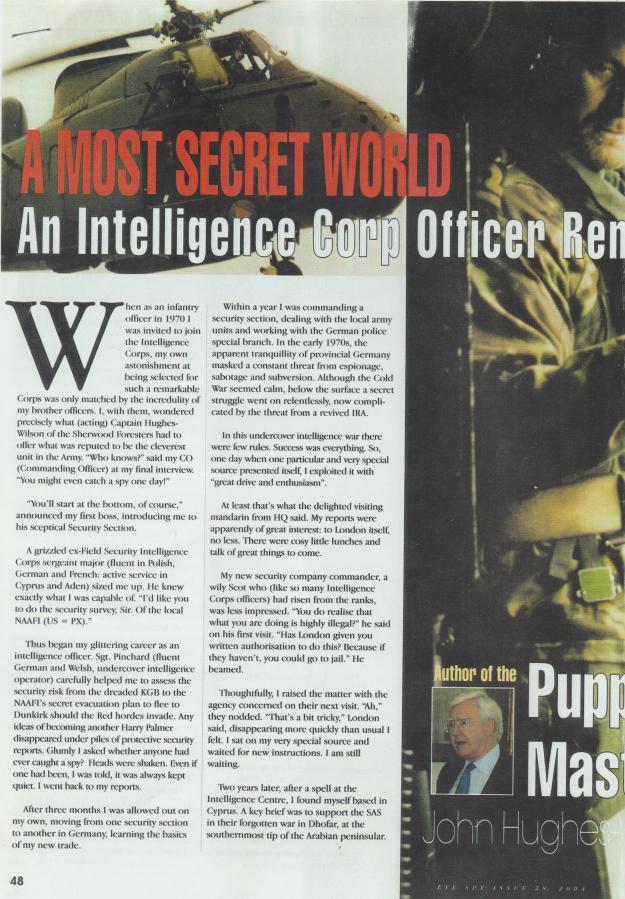
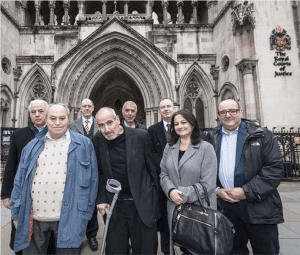 On 23 January 2019 the UK government reached an out-of-court settlement for £1 million for 33 elderly EOKA-era plaintiffs, who claimed they were tortured by British security services whilst being held in custody during the Cyprus Emergency (1955-9). All were arrested as terrorists by the British for their involvement with
 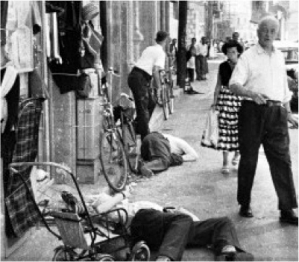 It pointed to the case of Nikos Sampson, the leader of EOKA’s Ledra Street murder gang, whose track record of cold-blooded murders of soldiers and civilians alike earned Nicosia’s main shopping street the nickname of ‘Murder Mile.’ However, Sampson’s well-justified conviction for murder was overturned on appeal by Judge Bernard Shaw, who ruled that Sampson’s confession was inadmissible as it had been made under duress. The smirking EOKA killer walked free from prison.
 The truth is that the settlement with the EOKA-linked claimants is a one-sided affair. It represents a bargain for the UK, because it suppresses discussion in open court of any unpleasant facts. However it sets a precedent. The question now is, when will EOKA compensate the relatives of those Greek, Turk and British victims they murdered in cold blood? EOKA veterans openly boast of their murderous exploits; so who will be bringing a court case to sue those who gunned down a doctor like Surgeon-Captain Gordon Wilson, or defenceless women like Mrs Catherine Cutliffe, for their bloody deeds? The one-sided settlement with EOKA is an outrage, as it ignores far worse crimes admitted by the Greek-Cypriots’ EOKA killers.
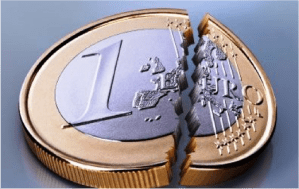 In any normal January commentators offer their views on the coming year. However, most years, after the usual mix of doom and gloom, the world seems to carry on in the same old way.
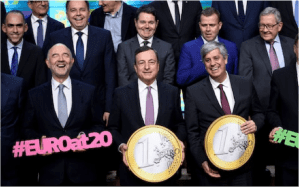 The smiling celebration party for the euro’s 20th anniversary masked the rising panic among the fat cats, bureaucrats and bankers waving champagne flutes for the cameras. They now know that their grandiose plans to cement the EU together by issuing a single currency was a huge gamble and a serious mistake. ‘The house of cards will collapse’, admits Professor Otmar Issing, ironically one of the original cheerleaders of the euro and the founding chief economist of the European Central Bank (
 Without a means to transfer funds and a ‘fiscal union’ by the EU countries (by pooling everyone’s taxes in Frankfurt and Brussels) the euro is at mortal risk. Now the economic storm clouds are gathering to make things even worse. Eurozone economies are slowing. Even the German economy is contracting. Industrial production was down by 4.7 per cent in the previous year leading up to November 2018. This means that, unbelievably, Germany – yes, Germany – is probably heading for a recession. Meanwhile, Italy has been in recession for a long time and Greece, Ireland, Spain and Portugal are still struggling to escape the last financial disaster. The Eurozone is heading for a full-blown recession; and without the means to devalue, or order ‘government’ spending to boost European economies, a slump seems inevitable. The pressure to break out of the stranglehold of the euro in order to print their own money has never been stronger for some nations.
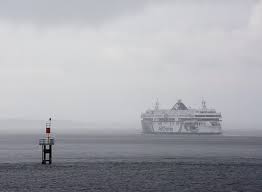 ‘Fog in Channel – Continent Cut Off’ was a famous headline before the World War I. However, it still captures the deep-rooted insularity of the British.
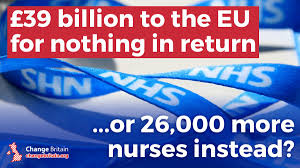 As with most divorces, the first quarrel has been about money. Grandiose EU plans are doomed if the UK refuses to pay the £39bn settlement; it’s PM May’s most potent weapon. Brexit therefore confronts ‘Europe’ with a massive problem. Losing one of the biggest financial contributors to the EU means that the Commission’s budget will have to be rewritten and a lot of expensive projects shelved. (However, the Commission will fudge it: no honest accountant has signed off the EU’s ‘audited’ accounts for 21 years.)
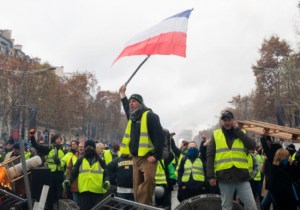 Inevitably this growing economic crisis has now spilled on to the streets of Europe. In France, President Macron’s unpopular ‘reforms’ – like increased petrol tax – have encouraged citizens to protest in the traditional French way. The gilets jaunes (yellow vests) are rioting on the streets. But their protests are about more than just France. They are also about the EU, because Macron has become the main cheerleader for the EU now that Angela Merkel’s long Chancellorship is heading for the German knacker’s yard. Macron’s capitulation to the rioters with his curious cocktail of police brutality and concessions to rioters shows that the greatest crisis for the EU is the spreading challenge to Brussels from despised ‘ordinary voters.’
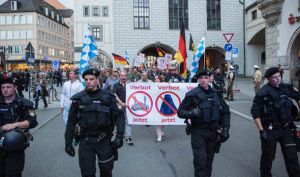 Even in safe, comfortable Germany, the nationalist far-right now poses a menacing threat to the cosy CDU-SPD order, with the electoral successes of the anti-EU Alliance for Germany (AfD) party. Also, In Belgium, ‘capital of Europe’ and headquarters of the EU, a political shambles is taking shape. Prime Minister Charles Michel resigned just before Christmas and now leads a caretaker government until fresh elections can take place in May 2019. He is leaving the screen whilst ordinary Belgians worries about chronic unemployment and Islamic immigration are stoking serious public unrest.
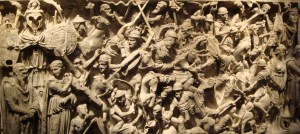 The word ‘barbarian’ comes from Greek and simply means ‘uncivilised foreigner – person not like us’. Today Europe faces an invasion of people ‘not like us.’
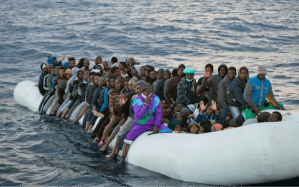 Sounds familiar? The fact is that Europe today is facing just such an invasion. Millions of Africans immigrants will flood Europe unless it acts now, warns the European Parliament. This dire prediction is echoed by the Mayor of Lyon. ‘People do not want to live together … It’s difficult to estimate but I would say that in five years the situation could become irreversible. We have five, six years to avoid the worst.’
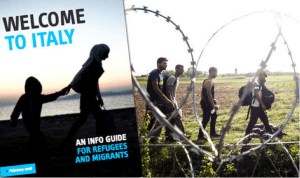 Opinion is split on how to deal with this unprecedented invasion. Many Europeans, from Stockholm to Seville, are deeply alarmed and resentful. Others, guided by Frau Merkel’s admission of a million refugees from Syria, are sympathetic and even welcome the invaders. For example, there is now a handy 76-page booklet handed to migrants to evade EU borders. This comprehensive guide is being given to migrants arriving in Italy, giving them tips on how to travel through the promised land of Europe.
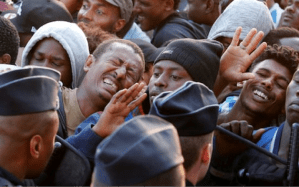 Not everyone agrees. Individual countries have re-introduced hard border controls within the
 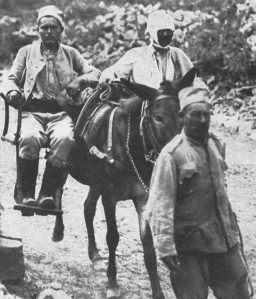 In 1914 Cyprus was a protectorate of the British Empire, leased by the Ottomans in 1878 to provide London with a base in the Eastern Mediterranean. This all changed in 1914 when, following a secret treaty between the Ottomans and Germany, the Ottoman Empire declared war against the Triple Entente powers of Great Britain, France and Russia. The British garrison promptly annexed the island on 5 November 1914.
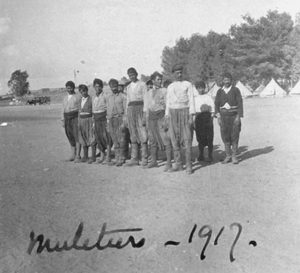 Nevertheless many Cypriots played an active part in the war. Thousands volunteered for the British army and they played an important part in the Salonika campaign. By 1916, the Military Commander of the British divisions on the Salonika front requested a Corps of Muleteers to help carry stores and supplies in the mountainous region of Macedonia.
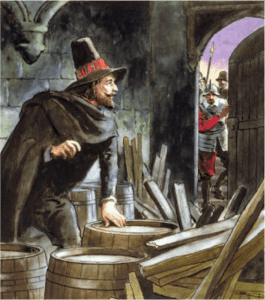 ‘Remember, remember
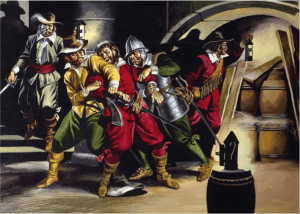 On that same evening a search party finally discovered a large pile of firewood beneath the House of Lords, accompanied by ‘a simple serving man.’ It was Guido Fawkes. Later that night an armed party returned to search the undercroft more thoroughly. Once again they found Fawkes. He was arrested, giving his name as ‘John Johnson’. He was carrying a lantern and a pocket watch plus fuses, and slow-matches. Barrels of gunpowder were discovered under firewood.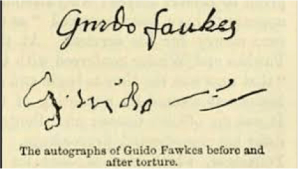


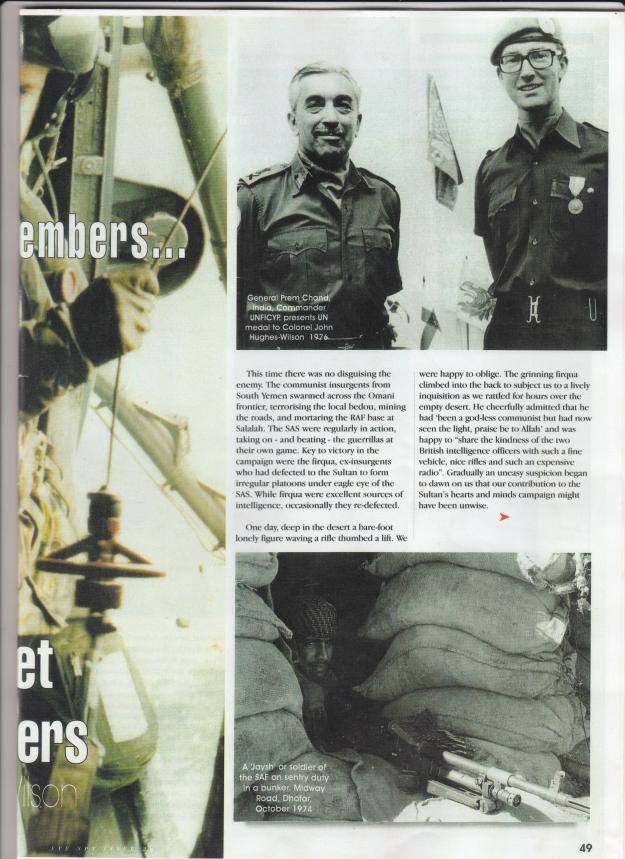
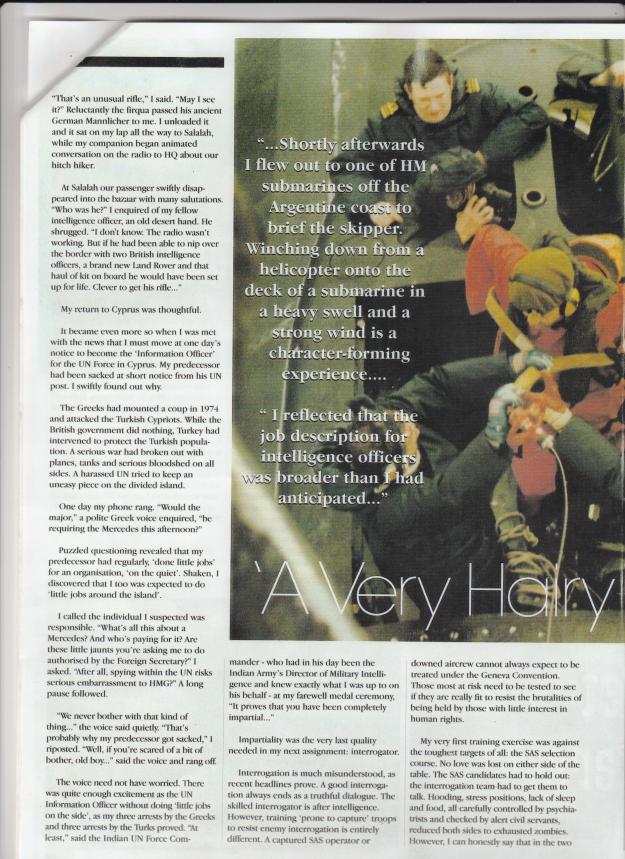
 John Hughes-Wilson