 Well, it’s already started. The many wars in Syria, Lebanon, Iraq, Iran are beginning to come together into one single, bigger conflict. We are on the road to another war.
The shadow war, which has been going on between Iran and its sworn enemies, Israel and America, ever since Iran’s 1979 Islamic Revolution now looks like escalating. In the last few weeks there have been ominous military, naval, diplomatic and psychological-warfare developments on all fronts. The omens are not good; we seem to be heading for a major bust-up not very far from here.
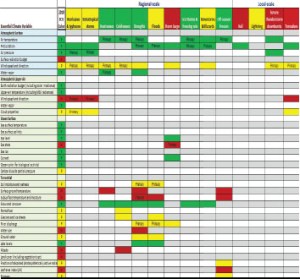 Intelligence officers use a system called an ‘Indicators and Warnings board’ to monitor events and assess where they are heading. Essentially it is a list of key questions, listing the critical information requirements. Examples might be:
• Are the potential enemy’s warplanes bombed-up and armed?
• Are the pilots on weekend leave?
• Is radio traffic normal?
• Have reservists been called up?
The answers are traffic-light coded – green for normal, amber for abnormal activity and red spelling danger.
Today, the I&W board for the Middle East is not looking encouraging. From Tehran to Tobruk the war drums are beating. Iran, as ever, is at the heart of the problem.
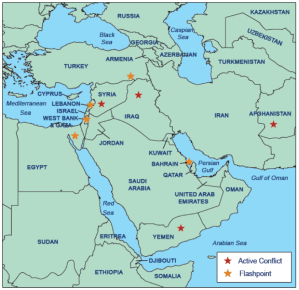
Should another red star be added to the Strait of Hormuz in the Persian Gulf?
The narrow Strait of Hormuz is the world’s most important oil chokepoint because of the large volumes of oil that pass through the strait. In 2018, its daily oil flow comprises 21 per cent of global petroleum liquids consumption. China’s gluttonous need for fuel makes the Gulf indispensable to Beijing.
This puts Iran in a strong position geographically; and for decades Tehran has been threatening to block the Straits. In July 2018, Tehran hinted that Iran could disrupt oil flows through the Strait in response to US sanctions and Trump’s calls to reduce Iran’s oil exports to zero. A Revolutionary Guards commander warned that Iran would block all oil through the Strait if Iranian exports were stopped.
 The USA has been willing to use its firepower in the past. It escorted ships here during the 1980s ‘Tanker War’. America fought its last naval battle in these waters against Iran in 1988. In July that year, the warship USS Vincennes even shot down an Iranian airliner, killing all 290 aboard, in what Washington said was an accident. Tehran said it was a deliberate attack.
This summer has seen Iranian attacks on tankers with the result that now the US Navy is putting together a coalition of nations to counter a renewed maritime threat from Iran.
This US move to build a maritime multinational force to patrol the key sea route across the Strait of Hormuz prompted outrage in Tehran. Iran’s Foreign Minister blamed the US, insisting that ‘any extra-regional presence is by definition a source of insecurity’ and that Iran ‘won’t hesitate to safeguard its own security.’ The result is that tankers are now being convoyed down the Straits. All it needs now to spark fighting is some out of control Revolutionary Guard commander chancing his luck – and the Iranian RGC is a law unto itself.
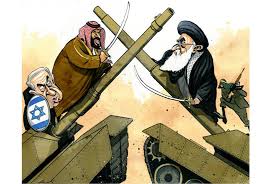
This is demonstrated daily in Syria, where the long arm of Tehran now reaches as far as the Israeli border. For months now an undeclared low intensity war has been waged by the Israelis, systematically targeting Iranian weapon dumps, training camps and missile sites across Syria. Unfortunately Netanyahu’s professed strategic goal – ‘the removal of all Iranian forces from Syria’ – is fantasy. The result is a dangerous instability, because Israel is confronting a nasty dilemma. An enemy sworn ‘to drive Israel into the sea’ is camped on his borders; and every day that Tel Aviv does nothing to pre-empt Iran’s expansion makes the potential enemy stronger.
Netanyahu has been steadily raising the stakes, ostensibly with the aim of forcing Iran back to its own turf. But what does Israel seek to achieve? Removing Iran’s forces from the entire Middle East? Changing the Iranian regime?
What kind of American backing can Israel expect? Israel is now upping the ante. It was undoubtedly responsible for recent explosions at Iran-linked sites in Iraq. Sabotage or air strikes were involved and Israel stands at the top of the list of potential culprits. Israel is on the verge of expanding its anti-Iran campaign from Syria deep into Iraq to check the threat from the Islamic republic. But any Israeli action in Iraq comes with high risk that it could ignite a major regional war.
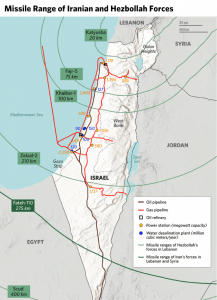
So the danger of crossing the line between limited and full-scale warfare between Israel and Iran grows daily more likely, especially now that Hezbollah – Tehran’s Shi’a proxy, currently running Lebanon – appears to be gearing up for a missile strike on Israel’s cities.
To make this devil’s brew more dangerous still, Iran – smarting from increased US sanctions – is now openly accelerating its drive to get a nuclear weapon. The Mad Mullahs, hell bent on war, can just about be contained; but the Ayatollahs with a bomb? For Israelis that is a chilling step too far. It threatens the country’s existence. Israel has made it very clear: it will not allow an Iranian bomb – by force if necessary.
Others in the region are equally nervous of any Atomic Ayatollahs. Sunni Saudi Arabia has the money and technology to build a bomb quickly to deter the Shi’a of Iran; and only last week President Erdogan openly hinted that of Turkey has an interest in obtaining a bomb, adding to worries about the proliferation of nuclear weapons in the Middle East.
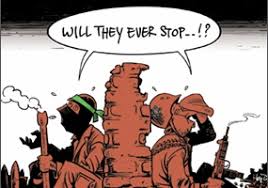 If this were not bad enough, everywhere you look in the Middle East there are many other dangerous flashpoints, many of them already the scene of fierce fighting. In Yemen, Sunni fights Shi’a (Saudi versus Iran), as the Houthis become part of Iran’s regional proxy warriors. On the Syrian border, Turkey is already busy fighting the Kurds. Gaza and the West Bank still simmer with anti-Israeli anger. Israel has already mobilised some reservists as a cornered Netanyahu looks for a grand gesture – probably a demonstration of Israel’s military might – to help him form a government after the recent elections.
Even sleepy little Cyprus, sitting secure in the eye of the hurricane, is now feeling the heat. Drawn by the lure of black liquid gold, powerful allies are now jockeying for position. Ankara suddenly finds itself having to confront a Greek-Cypriot defensive alliance of Israelis, Egyptians, Greeks and Italians – plus France and the USA – all hungry to get their hands on the spoils of the huge natural gas reserves off the coast. Gunboats now protect the Turkish prospecting ships as a symbol, a warning and a deterrent.
The truth is we are sitting in the middle of a region set to explode at any moment, thanks to an aggressive Iran-sponsored build-up. The plan appears to be to force Israel to concentrate on dealing with threats to its civilian population – from rocket barrages and commando raids – from Lebanon, Syria, and Gaza. Consequently, Israel would not be able to focus on blocking the principal surge when it comes.
Now even China is involved. Beijing considers Iran to be its strategic partner in the greater Middle East and vital to China’s ‘Belt and Road Initiative’ across Asia. The PRC knows that the Iranian network of roads, railroads and pipelines all the way to the Mediterranean is a major contribution to the ‘New Silk Road.’ But now, Beijing is becoming increasingly concerned by the sudden possible slide to war caused by Iran’s regional ambitions.
It may not come next week, it may not come next year, but be in no doubt, the Middle East is gearing up for a major war. And it’s important to remember that for Jews, Christians and Muslims alike, according to their scriptures, a final battle between good and evil will usher in God’s brave new world, free from sin.
The place for this battle? The ancient city of Megiddo, better known by its Greek name – Armageddon – a real, geological location in Israel….
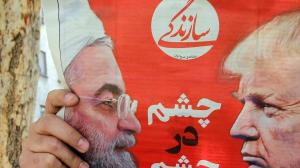 Here we go again. Even as you read this, the war drums are beating. And – surprise, surprise – it’s Iran that’s at the heart of this latest eruption of trouble in the Middle East.
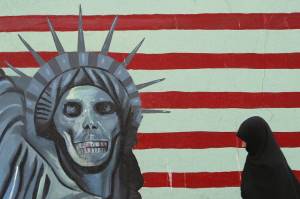 The 1979 revolution created strong passions in both countries. In Iran it was a glow of triumphalism over ‘The Great Satan’; and in the USA a simmering resentment at what was seen as a national humiliation. Few episodes in living memory, other than the sight of Royal Marines surrendering to Argentine invaders in 1982, show how public emotion can drive political decisions.
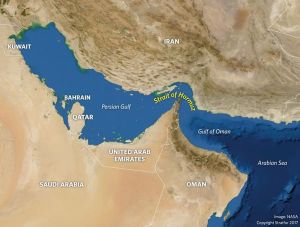 Satellites report Iran moving S-300 SAMs and massing armed fast gunboats in the Gulf. Their role would be to swarm out and attack American and Western shipping in the Strait of Hormuz, through which much of the world’s oil supplies pass.
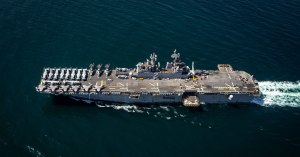 In response to these rising tensions, Washington has upped the ante, flying B-52 bombers into the region and moving a nuclear equipped carrier task force with 80 aircraft, accompanied by a Marine Expeditionary Force, to the Gulf. The objective of the exercise, in the words of national security adviser, is to ‘send a message’ to Iran. Donald Trump’s tweet spells out the threat implicitly: ‘If Iran wants to fight, that will be the official end of Iran.’
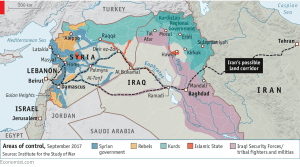 Tehran has significantly expanded its footprint over the past decade, making powerful allies across the Middle East as it forges its ‘Land Bridge’ west to the Mediterranean. The IRGC’s Quds Force controls up to 140,000 Shia fighters across Syria, many dug in on Israel’s border. Quds has close links to Hezbollah, Lebanon’s well-armed anti-Israel military organisation, part of Iran’s ‘axis of resistance’, armed groups with tens of thousands of Shi’ite Muslim fighters backing Tehran. In Gaza, Iran supports Palestinian Islamic Jihad in its struggle against what Tehran calls the ‘Zionist enemy’. Further south in Yemen, the insurrectionary Houthi rebels are openly fighting Iran’s enemy, Saudi Arabia.
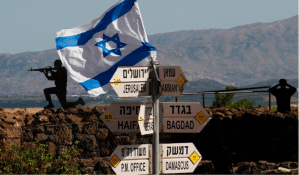 The Roman poet, Horace, once observed, ‘when your neighbour’s house is on fire, you should worry.’ It now looks as whole Middle East could catch fire, because the embers of the Syrian civil war have morphed into something much more dangerous, risking setting off a major new war between Israel and Iran.
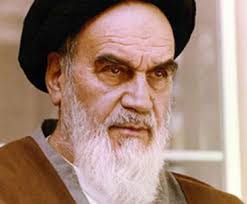 The problem goes back to 1979 when Iran deposed the US-backed Shah, America’s closest ally in the Middle East. However, Iranians soon found that they had swapped one dictator for another, the Shi’ite religious fanatic Ayatollah Khomeini. His battle cry was ‘Death to Israel, Death to America.’ Since then, Khomeini’s Islamic Revolution has had far-reaching consequences for Iran and for the Middle East. Tehran is now wedded to violent anti-Western policies, international terrorism, crushing internal dissent and exporting their Shi’ite version of revolution.
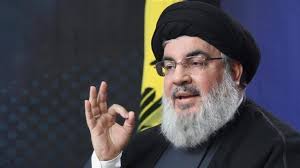 Emboldened by Iran’s protective umbrella, speaking at a rally marking the 40th anniversary of Iran’s Islamic Revolution and the overthrow of the Shah, Hezbollah’s leader (Hassan Nasrallah) warned that Lebanon would ‘defend Iran in the event of war,’ and ‘if America launches war on Iran, it will not be alone in the confrontation, because the fate of our region is tied to the Islamic Republic’.
 Rouhani also vowed Iran would defeat harsh US sanctions, re-imposed after President Donald Trump withdrew from Tehran’s nuclear accord with world powers last year. Meanwhile Iran’s secret drive to acquire nuclear weapons continues apace.
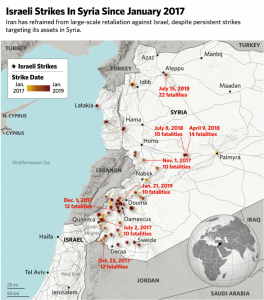 In May 2018 Iranian forces fired 50 rockets and mortars into the Golan Heights. This barrage did not inflict a single casualty and caused negligible damage. Israel’s prompt response was airstrikes hitting more than 70 targets. With those strikes, Israel demonstrated its ability to retaliate, warning Iran that attacking Israel would only invite an even more forceful reply. Iran backed down. Its limited capabilities in Syria makes Tehran nervous of any escalation – for now. Israel has a significant military advantage, enjoying overwhelming air superiority that can kill Iranian forces and destroy their equipment.
 The danger is that any escalation from Iran could spark a major escalation of fighting, which in turn would be met almost certainly with an overwhelming Israeli response in Lebanon and Iraq. Israeli Prime Minister Netanyahu spells out the consequences: ‘Whoever tries to hurt us, we will hurt them. Whoever threatens to destroy us will bear the full responsibility.’
 Winston Churchill once famously said, ‘battles are the punctuation marks of history.’ Well, we have just avoided a potentially disastrous ‘exclamation mark’ in the bloody history of the Middle East. Whilst the post-colonial
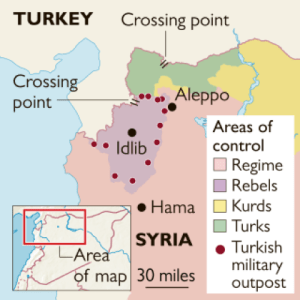
 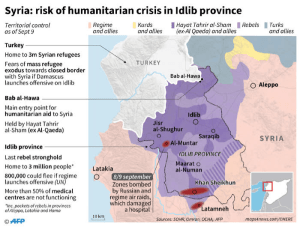 Many of the civilians in Idlib are already refugees from other parts of Syria following the collapse of the opposition resistance in cities such as Aleppo. The consequences of an all-out offensive against Idlib with its hapless civilians and the risk of Turkish troops fighting Russians could have led to a bloodbath.
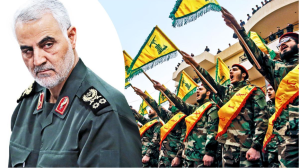 ‘The Assyrian came down like the wolf on the fold,’ wrote Lord Byron in his famous poem about the ancient Persians on the rampage. Well, the modern Persians are on the rampage now; and they are right on our doorstep.
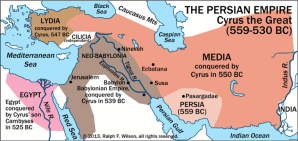 One of the mistakes Westerners make is thinking that the Middle East is run by Arabs: wrong. The Middle East is mainly split between Persians and Arabs; and they don’t get on – and never have. The ancient Persians were the bane of Greece and Rome; it wasn’t until the fanatical Arabian warriors of Islam conquered Persia in 651 that the Persians even became Muslim. To this day Persia – now calling itself Iran (after its Persian name) – is a separate culture, language and even a separate branch of Islam.
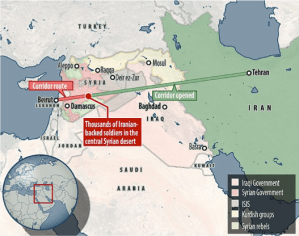 Iran’s efforts to expand its influence are there for all to see. Following the rout of ISIS by Kurdish infantry and American and Russian air power, Iran now controls large swathes of the Middle East, as well as dominating the governments in Baghdad and Damascus, whilst simultaneously intimidating the Gulf States. Through its use of proxy fighters like the Houthis in Yemen, Hezbollah in Lebanon and Hamas in Gaza, Tehran’s tentacles have now reached the Mediterranean. Iran is busy setting itself up as a regional superpower.
 For once I find myself in total agreement with Vladimir Putin, who observed recently in a Blinding Glimpse of the Obvious that ‘the world is becoming a more chaotic place.’ Whilst Pres-for-life Vlad’s BGO doesn’t exactly qualify him as a great thinker, this time he is absolutely right. There’s a definite feeling abroad of an unravelling in world affairs; an uneasy sense that something nasty is lurking round the corner of history ….
 Well, that’s it. The war is over, ISIS is beaten and on the run. We can all relax and bring the boys home. Mission accomplished.
 John Hughes-Wilson