Silent enim leger inter arma
Possibly the most used historical quotation in many tongues is the opening of Psalm 46: ‘God is our hope and strength, a very present help in trouble.’
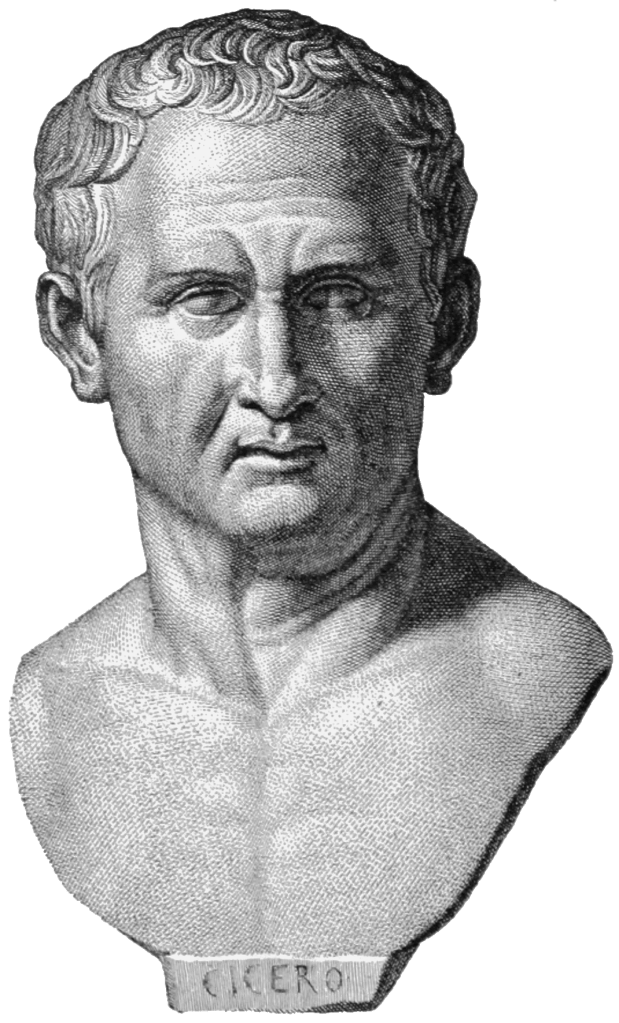
Variations of these words, or very similar heartfelt sentiments, have been voiced by frightened soldiers – and not a few civilians faced with death and destruction – for over 4000 years. It makes the point that, after the elemental forces of nature, it is war that most scares humanity – and rightly so. Fear has ever been the universal emotion of the battlefield. Perhaps that is why mankind over the centuries has tried to limit war and control its bloody excesses. However, when societies elect to sort out their political, social and economic problems by resorting to violence, killing people and breaking things, in Cicero’s famous quotation, ‘silent enim leger inter arma‘ or (in its English translation) ‘In war the law is dumb.’
One of the ironies of history has been the urge to try and control behaviour that is by definition almost uncontrollable. Although mankind has tried to devise ‘rules’ for fighting and killing one another en masse, the truth remains that war is still nothing more than legalised murder. After the horrors of the Thirty Years War, Europeans desperately sought to find laws to channel and limit the excesses of the brutal soldiery. But the French Revolution and ‘the nation in arms’ period changed all that. Out went the 18th-century constraints of limited war leading to the full horrors of industrial war. A fight to the death between whole nations and societies was gradually unleashed, finding their ultimate expression on the Eastern Front in World War II, in the indiscriminate fire-bombings of Dresden and Tokyo and, finally, with the atom bombs dropped on Hiroshima and Nagasaki.
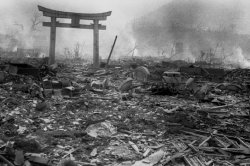
One effect of mankind’s new ability to obliterate and destroy on an unimaginable scale has been to encourage a new phenomenon: an increased attempt to try and control and limit war by the imposition of laws. Today, certainly in the West, we have teams of lawyers telling soldiers and generals what they can and cannot do on the battlefield. In modern warfare the law – and its all-pervasive lawyers – seem anything but dumb. Calls to indict Putin as a war criminal have eerie echoes of 1918’s ‘Hang the Kaiser!’ and overlook the massive industrial butchery of civilians from the air perfected by the RAF and USAAF by 1945. No nation has clean hands when it comes to the indiscriminate slaughter of civilians: ask the Uighars or the hapless Burmese Muslims. Even Britain has to explain away its legal right to go to war in Bosnia, Kosovo, Sierra Leone, Macedonia, Iraq and Afghanistan (among other examples). A ‘UN Mandate’ is a legal right only to those who agree, as Korea made plain.
Indignant, liberal western media rarely asks the key question: by whose law and on what authority do they call for selective legal vengeance on some aggressors? They forget the killing of innocent civilians in Afghanistan, let alone the fact that Russia has never signed up to the Rome Convention, setting up the International War Crimes Court. Nor, significantly, has the USA.
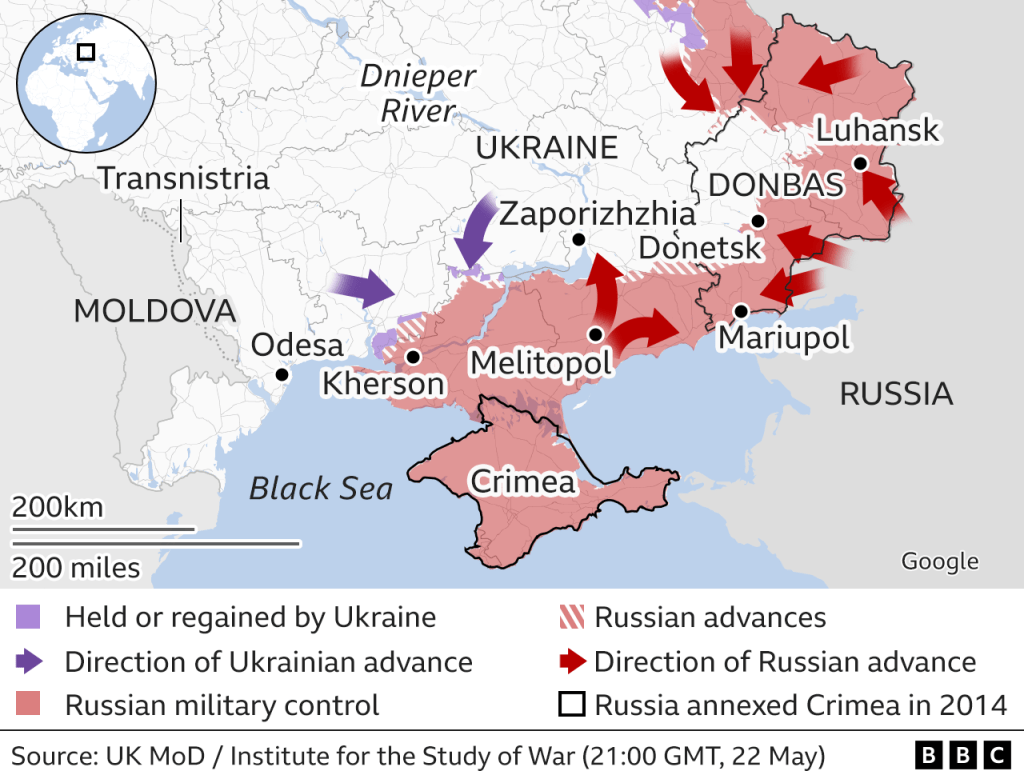
So, anyone who expects the Russians, a proud people, to hand over their Vozhd to decadent western lawyers needs to lie down in a darkened room. Whoever fails to see echoes of the Danzig Corridor in the seizure of the Marienpol–Donbas corridor, or genuinely expects to see Russia give up its link with its only Black Sea maritime naval nuclear base in the Crimea, needs to take lessons in realpolitik and history.
The irony remains that, for those enemies waging their asymmetric campaigns against Western liberal democratic states, ‘the law’ and lawyers are the last thing they ever care about. They just want to slaughter, maim and destroy for their cause, be it territory, populations or greedy economic advantage. Mankind’s atavistic catalysts for conflicts have never gone away. Lawyers’ howls of protest or not, the old Roman was right. It was ever thus.
Truly the reality remains: in war – real, all-out war, à l’outrance – ‘the law; remains as dumb as ever.
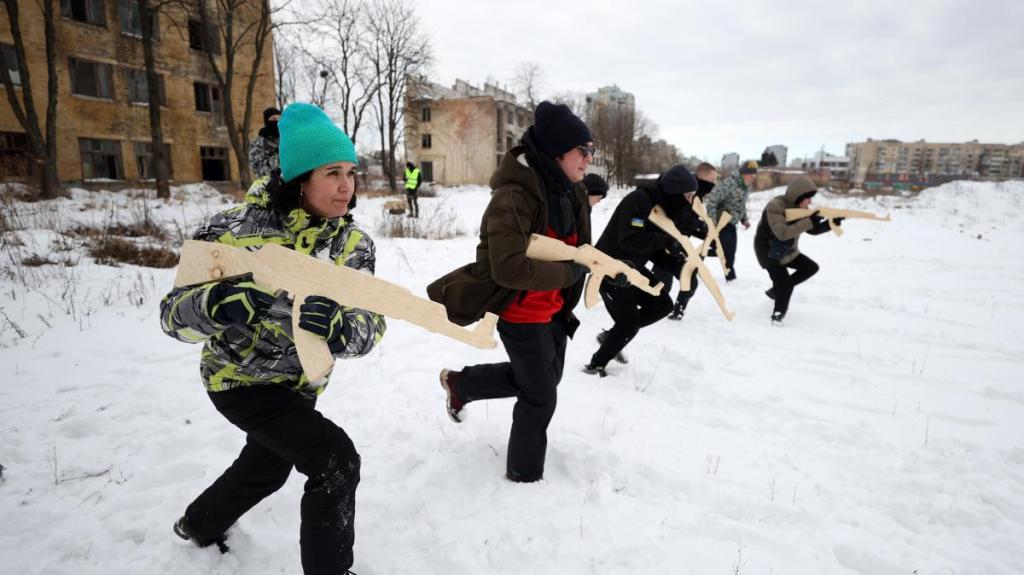
 Well, it’s already started. The many wars in Syria, Lebanon, Iraq, Iran are beginning to come together into one single, bigger conflict. We are on the road to another war.
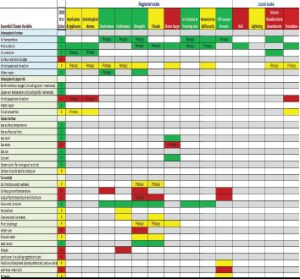 Intelligence officers use a system called an ‘Indicators and Warnings board’ to monitor events and assess where they are heading. Essentially it is a list of key questions, listing the critical information requirements. Examples might be: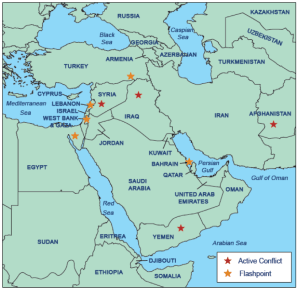
 The USA has been willing to use its firepower in the past. It escorted ships here during the 1980s ‘Tanker War’. America fought its last naval battle in these waters against Iran in 1988. In July that year, the warship USS Vincennes even shot down an Iranian airliner, killing all 290 aboard, in what Washington said was an accident. Tehran said it was a deliberate attack.
 If this were not bad enough, everywhere you look in the Middle East there are many other dangerous flashpoints, many of them already the scene of fierce fighting. In Yemen, Sunni fights Shi’a (Saudi versus Iran), as the Houthis become part of Iran’s regional proxy warriors. On the Syrian border, Turkey is already busy fighting the Kurds. Gaza and the West Bank still simmer with anti-Israeli anger. Israel has already mobilised some reservists as a cornered Netanyahu looks for a grand gesture – probably a demonstration of Israel’s military might – to help him form a government after the recent elections.
 The row that has blown up over the leaking of the British ambassador’s private opinions of President Trump and his administration has far-reaching consequences.
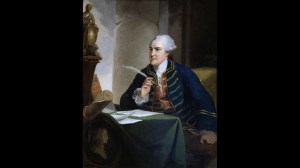 In the late 1770s this was remarkable stuff. Across the Atlantic, radical MP and journalist
 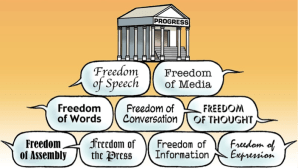 Early American courts struggled with the argument that the punishment of ‘dangerous or offensive writings… [was] necessary for the preservation of peace and good order…’ How did that balance with a free press guaranteed by federal law? That difficult question was swept under the carpet for two centuries after the ratification of the First Amendment to the US Constitution.
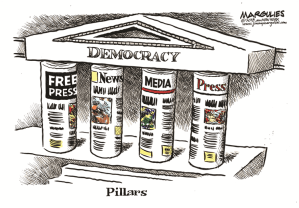 The Supreme Court agreed, and held that virtually all forms of restraint on free speech were unconstitutional. The key was that embarrassing the government was no crime; the real illegality was the theft of secrets.
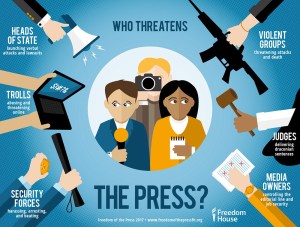 The irony is that the British press are often far too ‘responsible’. For example, over the
 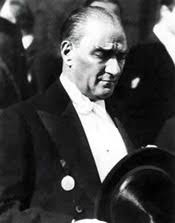 ‘Peace at home; peace in the world.’ Atatürk’s homely ambition has never been more important for Turkey. However, a number of crises are coming together inexorably to force Ankara to think long and hard about its future intentions. Turkey is at a major crossroads.
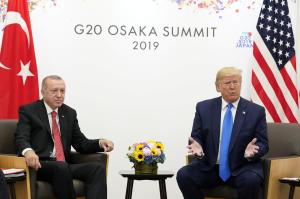 Then, in late June 2019 (in the margins of the G20 Osaka meeting), the Turkish president claimed that a deal had been struck. President Trump had told him there would be no sanctions over the Russian deal and that Turkey had been had been ‘treated unfairly’ over the move.
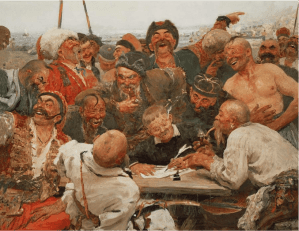 The problem is that Turkey and Russia have serious form going back to the days of the Tsars. For example, the Crimean War in the 1850s was really all about Russian and Turkish rivalry. Since the days of the Ottoman Empire, Turkey has always sought to deny Russia a significant presence to the south or in the eastern Mediterranean. But that is now where Russia is becoming increasingly active – especially in Syria. As Russian influence grows, Turkey’s room for regional influence shrinks. Turkey’s recent accommodation of Russia is therefore historically and geopolitically unusual.
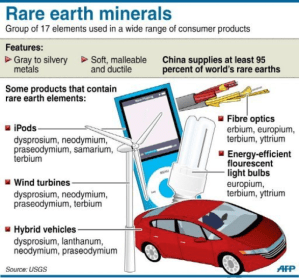 Right! Hands up all those who have heard of rare earths?
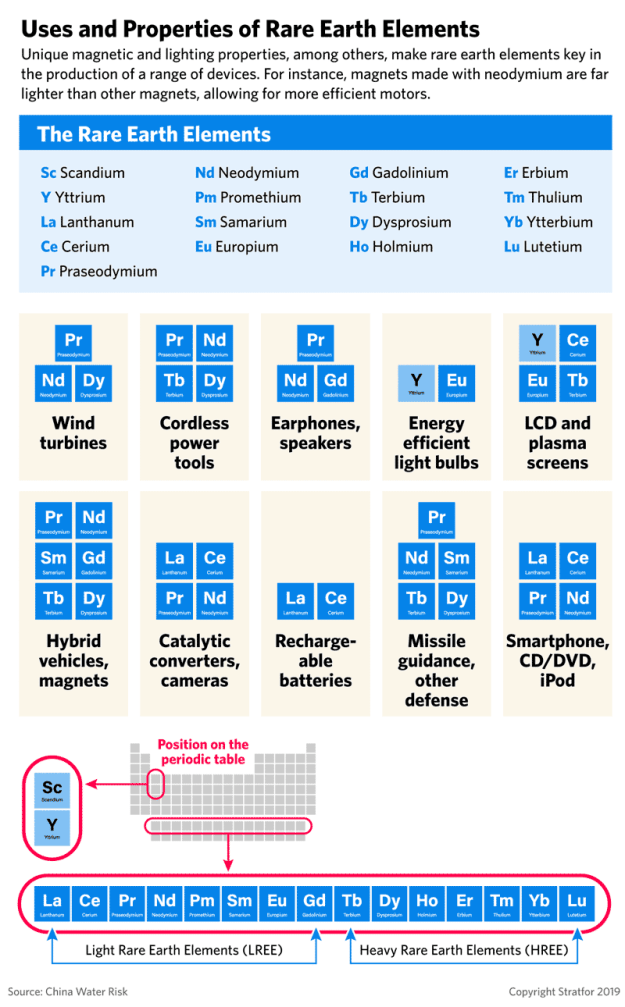 Scandium Found in aerospace alloys and cars’ headlamps
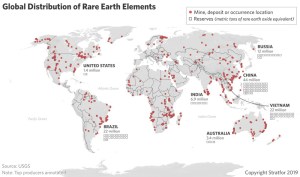 So, just as with plastic, the West has ducked responsibility, outsourcing the environmental challenges of rare earths by dumping the problem out in the dusty deserts and cheap mass labour of far-distant China. By doing so it has allowed Beijing to corner the global market. There’s a price; China holds 37 per cent of the world’s rare-earth deposits and it controls the rest. Even when rare earths are mined in the US – or in other nations, such as Estonia – the extracted material is sent to China for processing. It’s cheaper, easier and, most important, it avoids the environmental lobby’s inevitable shrieks of outrage.
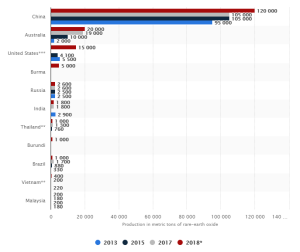 The result is that Western scientific and technical efforts have failed to develop new, cost-effective rare earth substitutes. Many universities no longer offer courses and advanced degrees in ‘materials science’, ‘metallurgy’, or ‘mining engineering’. China has cornered the market. Rare earths are now an ace in Beijing’s hand. ‘The geopolitical and economic importance of rare-earth minerals is vastly inflated by China’s overwhelming near-monopoly on the mining of these elements,’ says Ole Hansen, the head of commodities at Saxo Bank (
 The Chinese are well aware of the importance of these commodities. In May 2019, Chinese leader Xi Jinping made a dramatic and highly symbolic gesture. He visited one of China’s most important rare-earth metals mining and processing plants, in Ganzhou, along with Liu He, his US chief negotiator in the trade talks.
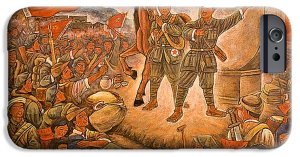 Even more significantly, he combined the visit with a stop at the monument in Yudu that marks the start of Mao’s ‘Long March’ during the Chinese civil war during the 1930s. The Long March, when the communist armies undertook a 6000-mile trek to the mountains of the north during the civil war, was a key event in communist China’s history. Xi was signalling a symbolic warning to America and the West that in any trade war, China is ready for a long, painful economic conflict.
 The global effects of the visit to the Ganzhou plant were swift. Rare-earth equities leapt in value. America’s Blue Line Corporation of Texas rushed to sign a deal with Australia’s Lynas Corporation, one of the few rare-earths processors outside China. ‘I would expect US importers to develop local, domestic processing facilities over time and also to buy from non-China sources,’ said a spokesman.
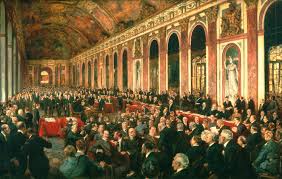 One hundred years ago, one of the most important conferences in the 20th century began (on 28 June 1919) culminating in the negotiation of a portentous document (finalised on 10 January 1920) that has had ramifications ever since. The Treaty of Versailles – signed to put a formal end to Word War I – turned out to be a disastrous script offering nothing but grief. It would lead in future decades to the death of millions and the chaos of the world in which we continue to live today.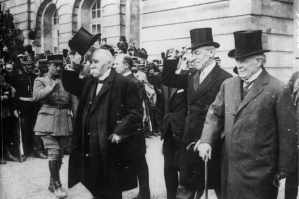
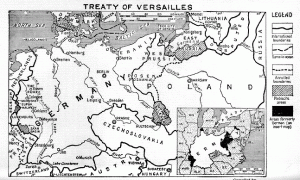 Meanwhile the peacemakers turned their attention to creating a new and supposedly more peaceful Europe. New countries sprang up in the Balkans, where the war had started in 1914. Hungary, Czechoslovakia, Bulgaria and Greece all got new borders. The Slavs got a national home in Yugoslavia and an independent Poland was created with a curious corridor to Danzig on the Baltic, isolating East Prussia, and creating a serious international hostage to fortune. The Baltic states of Lithuania, Latvia and Estonia suddenly appeared. Italy’s frontiers took in former Austrian territories inhabited by Italians. Ottoman Turkey lost everything as their empire was parcelled out. Further east the French got Syria – much to TE Lawrence and the Arabs’ dismay – and the British got the oil in what was now Iraq and Persia. (Kurdistan was completely overlooked, because Lloyd George had never heard of it and didn’t know where it was.)
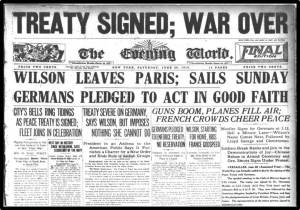 When the details of the treaty were published in June 1919 German reaction was surprised and outraged. The still-blockaded German government was given just three weeks to accept the terms of the treaty, take it or leave it. Its immediate response was a
 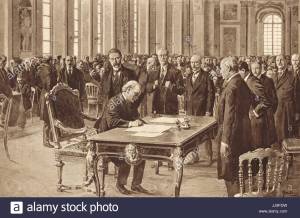 On 28 June 1919, in a glittering ceremony in the Hall of Mirrors at Versailles, the Peace Treaty to end World War I was finally signed. Next day Paris rejoiced, en fête; but in Germany the flags were at half mast.
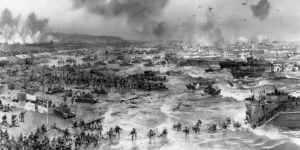 The invasion of Normandy by Allied forces on 6 June 1944, was the Western Allies’ most critical operation of World War II.
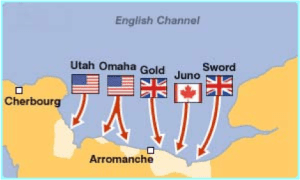 The 50 miles of Normandy coastline is therefore one of the most important battlefields of World War II. Today’s golden tourist beaches witnessed the start of one the most ambitious and historically important campaigns in human history. In its strategy and scope – and with its enormous stakes for the future of the free world – it was among the greatest military achievements ever. The Western Allies’ goal was simple and clear cut: to put an end to the Germany military machine and topple Adolf Hitler’s barbarous Nazi regime.
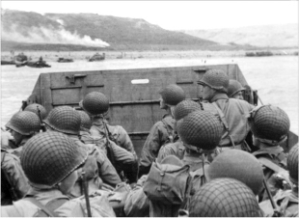 For the very old men of the surviving British, American and Canadian troops who spearheaded that assault at dawn on what one commentator called ‘the longest day’, this year’s anniversary was special. It will be their last big celebration of their victory, 75 years ago in the summer of 1944. Amid the beautiful French holiday countryside, one of the most critical struggles of the twentieth century took place. It was a struggle that would eventually end at the gates of Hitler’s Chancellery in Berlin on the last day of April 1945, as a demented and broken Hitler poisoned his dog and his mistress, before finally blowing his own brains out.
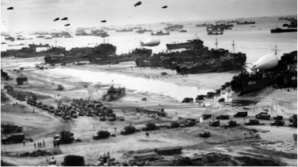 ‘Ike’ had 3 million troops under his command; what they all devoured in just one day was stupendous. According to historian Rick Atkinson, US commanders had ‘calculated daily combat consumption, from fuel to bullets to chewing gum, at 41,298 pounds per soldier. Sixty million K-rations, enough to feed the invaders for a month, were packed in 500-ton bales.’
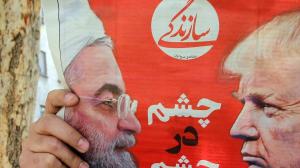 Here we go again. Even as you read this, the war drums are beating. And – surprise, surprise – it’s Iran that’s at the heart of this latest eruption of trouble in the Middle East.
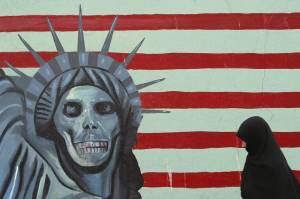 The 1979 revolution created strong passions in both countries. In Iran it was a glow of triumphalism over ‘The Great Satan’; and in the USA a simmering resentment at what was seen as a national humiliation. Few episodes in living memory, other than the sight of Royal Marines surrendering to Argentine invaders in 1982, show how public emotion can drive political decisions.
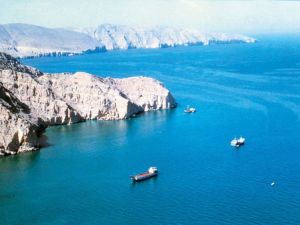
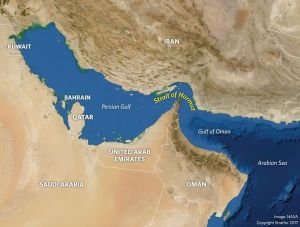 Satellites report Iran moving S-300 SAMs and massing armed fast gunboats in the Gulf. Their role would be to swarm out and attack American and Western shipping in the Strait of Hormuz, through which much of the world’s oil supplies pass.
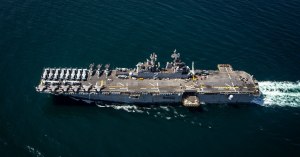 In response to these rising tensions, Washington has upped the ante, flying B-52 bombers into the region and moving a nuclear equipped carrier task force with 80 aircraft, accompanied by a Marine Expeditionary Force, to the Gulf. The objective of the exercise, in the words of national security adviser, is to ‘send a message’ to Iran. Donald Trump’s tweet spells out the threat implicitly: ‘If Iran wants to fight, that will be the official end of Iran.’
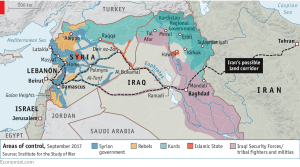 Tehran has significantly expanded its footprint over the past decade, making powerful allies across the Middle East as it forges its ‘Land Bridge’ west to the Mediterranean. The IRGC’s Quds Force controls up to 140,000 Shia fighters across Syria, many dug in on Israel’s border. Quds has close links to Hezbollah, Lebanon’s well-armed anti-Israel military organisation, part of Iran’s ‘axis of resistance’, armed groups with tens of thousands of Shi’ite Muslim fighters backing Tehran. In Gaza, Iran supports Palestinian Islamic Jihad in its struggle against what Tehran calls the ‘Zionist enemy’. Further south in Yemen, the insurrectionary Houthi rebels are openly fighting Iran’s enemy, Saudi Arabia.
 Just like the tip-off which led to the
  There is no doubt that Huawei has serious form over collecting secret intelligence and mis-using its computer hardware.
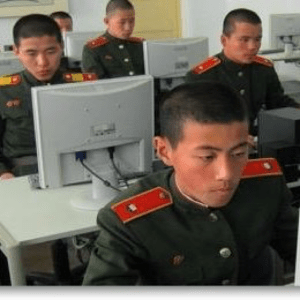 Worse, Huawei works directly for the Chinese government. Last December their Chief Financial Officer,
  The USA means business. The
  The
The  John Hughes-Wilson