Category Archives: News

Rights news: Military Intelligence Blunders new edition

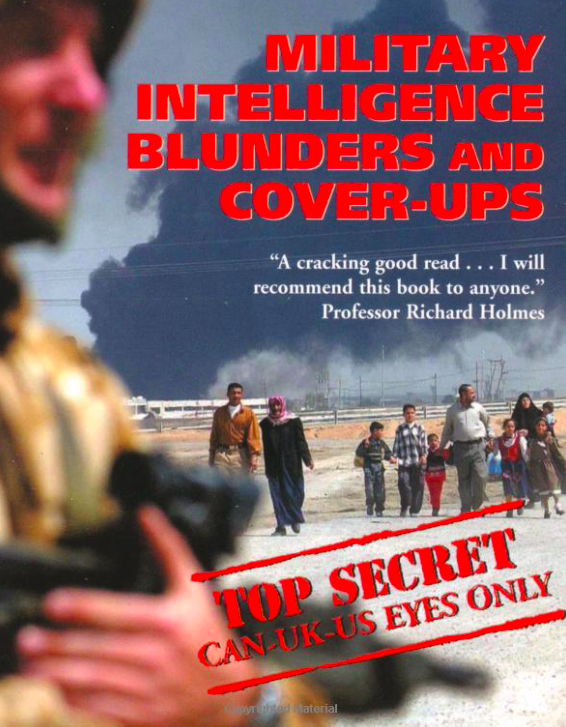
Front cover for the second edition of the book

As of Friday, 20 May 2022, Bonnier Books UK have signed a contract to do a third and updated edition of Military Intelligence Blunders to include references and analysis of military intelligence communication prior to Russia invading Ukraine on 24 February 2022.

Turkish Lira: A curious bit of creative accounting?

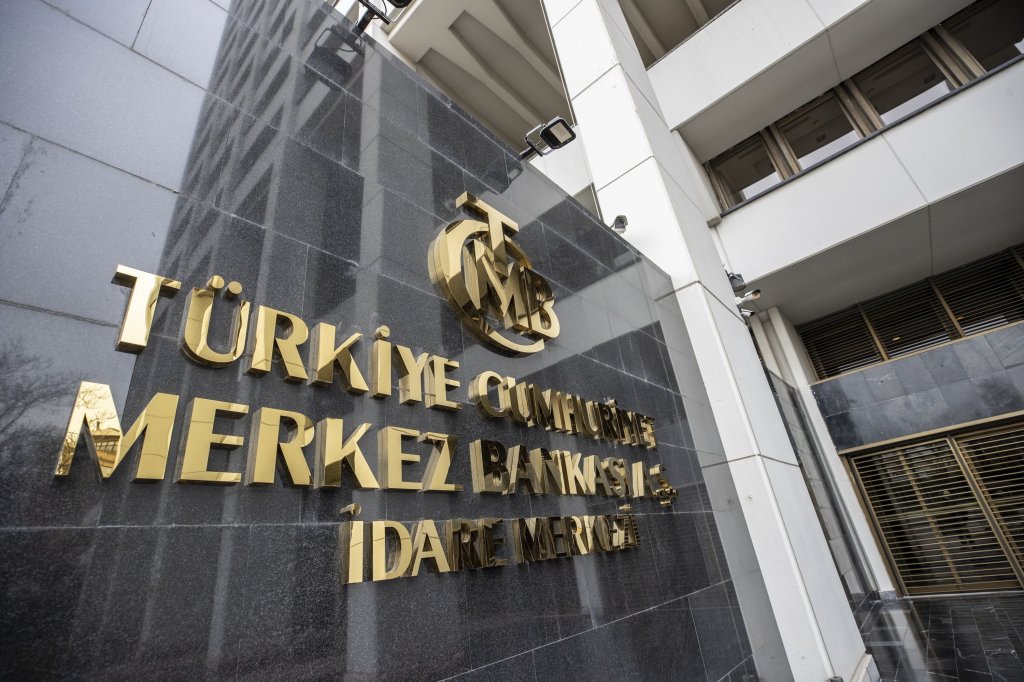
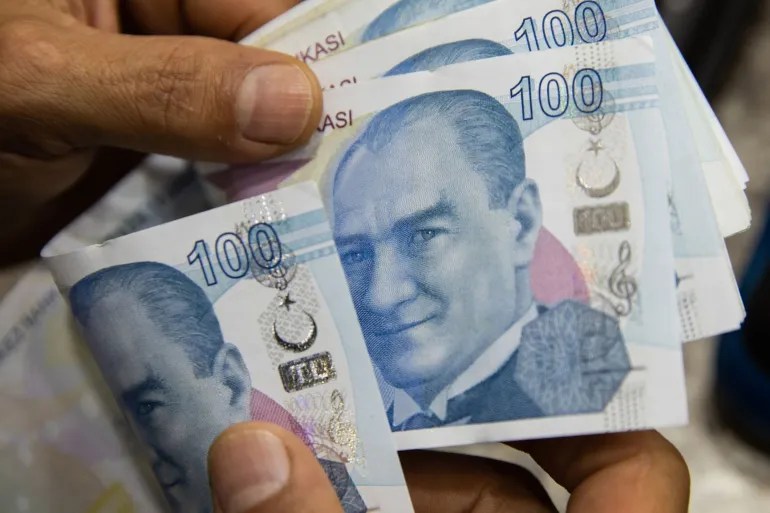
Turkey’s central bank continues to defy gravity. Its inert rate-setters held the benchmark interest rate at 14% for the fifth straight month recently, despite worsening inflation and the continuing collapse of the Turkish lira. It remains surprising how markets seem indifferent to bizarre monetary policy from the Turkish central bank.

The country’s monetary policy is inefficient and makes no sense. The central bank has no impact on monetary policy. Its policy rate has no impact on market rates.

However, Turkey’s central bank serves as a lira printing house and as the accounting department of the Erdogan administration.

The press picks up on these inconsistencies. One such article was published by Bloomberg – syndicated to Al Jazeera – on 4 January 2022, written by Cagan Doc:

Mystery surrounds end-of-year windfall for Turkey’s central bank

Turkey’s central bank had penciled in an expected $5.2bn loss on December 30, but managed to end the year $4.4bn in profit

Turkey’s central bank posted an extraordinary daily profit of around $10 billion on the final day of 2021, sparking questions on what caused this overnight boon that will trickle down to the nation’s Treasury.

The monetary authority had penciled in an annual loss of around 70 billion liras ($5.2 billion) on Dec. 30 but ended the year with 60 billion liras of profit, an unprecedented change of fortunes in a single day, according to its daily balance sheet. In February, the Ministry of Treasury and Finance – as the central bank’s biggest stakeholder – will begin collecting much of that sum as dividends.

The abrupt turnaround comes after President Recep Tayyip Erdogan unveiled measures meant to compensate lira investors for any losses. The Turkish currency slid 44% against the dollar last year, largely as the central bank – egged on by Erdogan – slashed its benchmark rate by 500 basis points since September.

The lira’s depreciation has fueled consumer price rises, with inflation ending the year past 36%, the highest level since September 2002. That’s eaten into Erdogan’s popularity as 2023 elections approach. But even with guaranteed returns on lira deposits, Turkish investors are still holding on to foreign currencies, undermining the Turkish leader’s plan to support the lira without raising interest rates.

Erdogan, who has attacked elevated borrowing costs as a brake on economic growth, pledged to remove the “bubble” from inflation in a speech on Tuesday, calling exchange-rate fluctuations and ‘excessive’ price increases ‘thorns’ on Turkey’s path. His policy of cutting rates to bring down inflation goes against mainstream economic thinking.

The central bank declined to comment on the dramatic move on its balance sheet, which was first reported on Monday by the bank’s former deputy governor Ibrahim Turhan and ex-banker Kerim Rota, both members of the opposition Future Party. Two officials familiar with the matter said it was in line with independent auditors’ accounting advice, but asked not to be identified because of the sensitivity of the matter.

According to Turhan, a possible explanation for the sizable overnight profit boost could lie in the sale of foreign-exchange reserves to the Treasury. The lira’s depreciation makes foreign reserves more valuable in local currency, but that can’t be logged in the profit column until the reserves are sold, he said.

The same amount of dollars would then have to be bought back to maintain the reserves level, Turhan said.

The Treasury’s borrowing program for the current three-month period showed authorities were already expecting 44 billion liras in external revenue next month.

Turkish Cypriots fear the heavy hand of Erdogan

The following article was originally published in The Times on 26 July 2021. It provides a context for the current likelihood of the success of any peace talks regarding the long-running conflict in Cyprus.

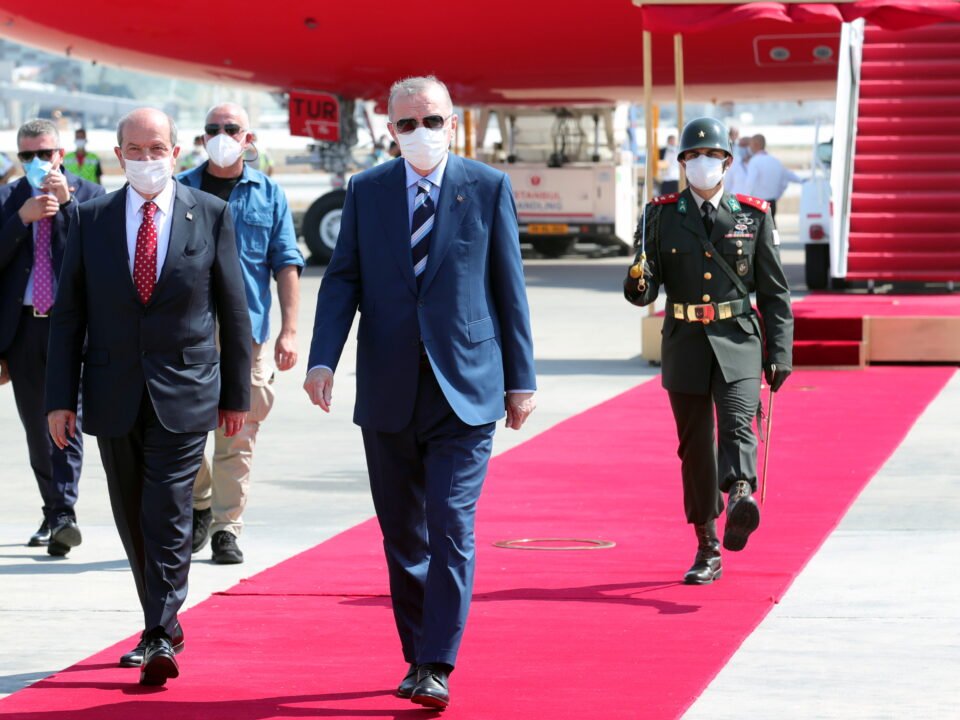
Under a punishing sun and the equally searing glare of international condemnation, President Tayyip Erdogan took the salute as the Turkish army paraded through northern Cyprus last week.

Hundreds of commandos marched in file while fighter jets and helicopters flew low and a long column of tanks and armoured vehicles roared past. Chants for the Turkish leader broke out from the crowd that had gathered to watch, many among them clutching placards of his image.

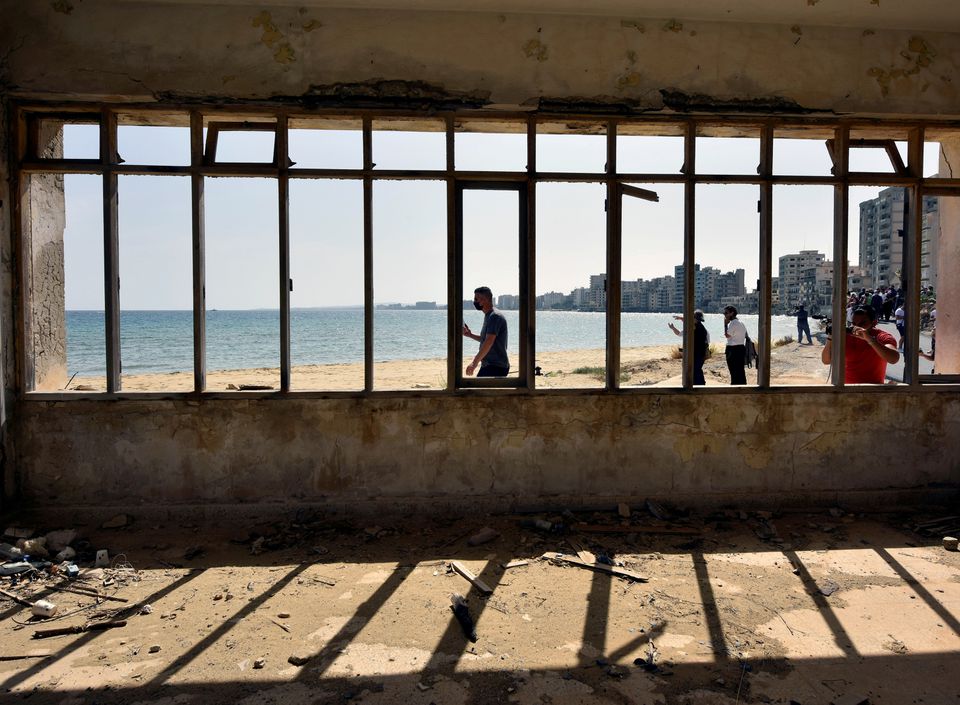
He gave them what they wanted: a raging recap of Cyprus’s bloody history, a diatribe against the hypocrisy of the West and assurances that the north will forge ahead to full independent statehood, torching the UN peace process predicated on reuniting the island. Away from the parade, his announcement that Varosha, once a glittering resort largely owned by Greek Cypriots, will be redeveloped by Turkish companies, has drawn rebukes from the UK, the US and the UN security council.

Plans for Turkish companies to develop the long abandoned resort of Varosha have fuelled fears of a new war on the island.

It was also eyed warily by many Turkish Cypriots, despite the enthusiastic turnout at the parade, which is held annually to mark the Turkish army’s landing on the island during the war of 1974.

For the first time Serdar Denktas was not there; instead, the veteran Turkish-Cypriot politician and son of the founding president of northern Cyrus sailed his boat to a more peaceful part of the island and contemplated the fading prospects for reunification.

“Once people lose hope, some of them look to Turkey, others to Greece. That is a loss for the Turkish Cypriots. Once our generation goes, we are finished,” Denktas, 62, said. “A two-state solution will not give us a heads up. I would love to be recognised but I know it won’t happen. We have to start with a very moderate policy with the Greek side, start working together on environment, health and trade with the political equality we had in the 1960s. Varosha could have been used in this direction. Instead, they open it and don’t care what anybody thinks. [Opening Varosha up to Turkish investors] would bring us to the edge of a new war.”

It is easy to forget that Cyprus, where a million Britons holiday each year, is Europe’s most enduring frozen conflict. Since 1974 it has been split straight through its capital, Nicosia. To the south, a Greek-speaking republic has joined the EU. In the north a complex society, tiny but unlike anywhere else on earth, has emerged.

The self-proclaimed Turkish Republic of Northern Cyprus was founded in November 1983, nine years after Ankara sent troops to defend the Turkish Cypriots in the aftermath of a Greek coup on the island. Rauf Denktas dominated politics there into the 21st century, and like many of his generation was determined to find a way to reunite the island.

Today about 30,000 Turkish troops remain stationed in the north, and while the state remains unrecognised by all but Ankara, it does run a representative office in London. You can fly there only from Turkey, and embargoes mean that it is mostly only Turkish companies which invest there, although a large community of British expatriates own homes. It has become a casino capital despite gambling being banned in Turkey, with 27 of them scattered across the north. There are 18 private universities, which attract scores of students from Africa and southeast Asia; young Pakistani men were among those who came to see Erdogan at the military parade.

After 1974 settlers from the Turkish mainland moved to the island in waves, bringing a more conservative, nationalist culture with them. Their descendants now equal the original Turkish Cypriots in numbers. The total population of 300,000 is still so small, however, that degrees of separation are slashed.

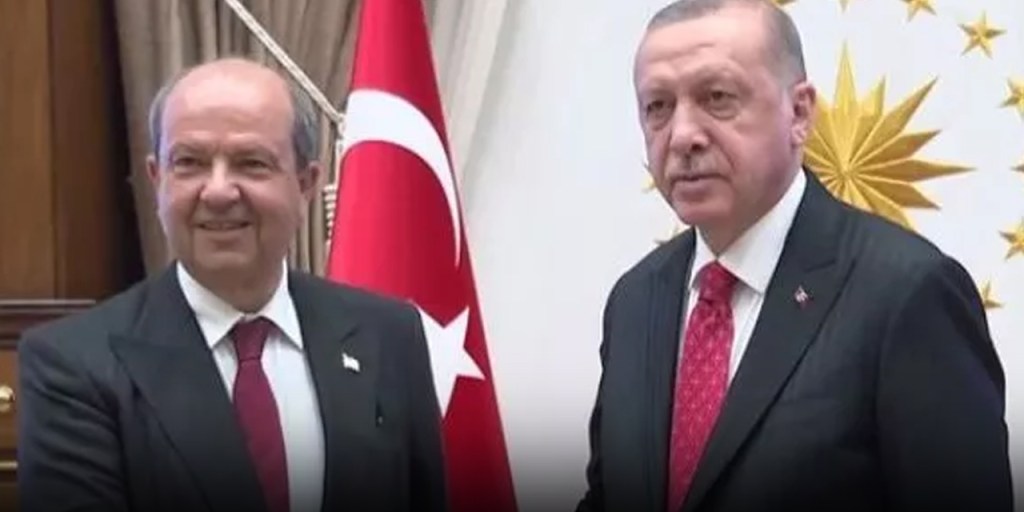
Ersin Tatar, 60, the new nationalist president who was elected with Erdogan’s backing in October and is a staunch opponent of reunification, was once an accountant to Asil Nadir, the Polly Peck boss jailed for stealing £29 million from his empire. At Nadir’s trial, one policeman said that Tatar had shredded papers for his boss. After years of speculation, the Serious Fraud Office in the UK confirmed in 2019 that Tatar was not under investigation.

The south is hardly doing any better. The banking crisis of 2012 prompted the government to sell citizenship to foreigners in return for a €250,000 investment in property; a scheme that was dismantled this year when it emerged that oligarchs and corrupt politicians from across the world had taken the opportunity to buy themselves EU passports. Relatives of President Anastasiades, 74, and members of his government are said to have profited from the scheme.

Russia’s influence has also mushroomed in the south, largely due to Syria’s civil war. It has struck a deal allowing its warships to use Cypriot ports, miles from the British air bases, while Russians are among the biggest citizenship investors. There is even a political party set up by and for Russian Cypriots.

Now there is a tangible sense that this volatile balance is tipping. Elections in the south in May resulted in gains for the ultra-nationalists, while a mounting row over the ownership of undersea hydrocarbons is deepening the mistrust. Even those in north Cyprus who oppose Erdogan’s growing influence say the south bears the brunt of the blame for his interventions.

“Anastasiades chose to put the political conflict aside, ignore the rights of Turkey and those of the Turkish Cypriots in the maritime zones and monopolise all hydrocarbon licensing and partnership agreements. The long-lasting isolationist policies of the Greek Cypriots on Turkish Cypriots and exclusion from the EU law continues to result in a growing dependence on Turkey,” said Fikri Toros, the foreign relations spokesman of the Republican Turkish Party, one of two blocs in the north Cypriot parliament to boycott Erdogan’s speech there last week.

Denktas ran against Tatar in October’s elections in an attempt to rein in Turkey’s influence and keep hopes for reunification alive. He found himself up against the might of Ankara, which poured money and people into Tatar’s campaign. Several opposition candidates, including Mustafa Akinci, the president at the time, say they were put under pressure to withdraw, including through visits from Turkish intelligence officers.

“I grew up adoring Turkey. I wasn’t able to criticise any Turk. When I entered politics and started criticising, my father would get angry,” Denktas said. “If Turkey has a good future, we will have a better future, but I feel we are vulnerable. We don’t have the power to decide for ourselves. We feel a lack of respect from the whole world. When the same comes from Turkey, it breaks our hearts.”

Obituary: Major Mike Dawkins

This reflection was first published by John Hughes- Wilson on the Intelligence Corps Association website (on 14 August 2019)

I first met Mike Dawkins when I landed at Stanley in July 1982 to take over from David Burrill as Head of Service Intelligence in the Falkland Islands. Mike was Head of the Joint Services Signal Unit and we agreed that, provided he kept me informed, I would not trouble him. I knew from GCHQ that things were going well and with Jim Hammond, his Number Two, we had an amicable and sound personal and professional relationship.

However the problem with Siginters is that they rarely, if ever, come into contact with ‘the enemy’. Just before Mike left to return to UK he remarked wistfully that he always wondered about the Sovs.

As I was billeted with the Stanley Harbour Master, Les Halliday, we decide to give him his chance. Suitably dolled up in an (incognito) assistant Harbour Master’s uniform he set out in the pilot boat with Les to check on one of the several Soviet AGIs masquerading as trawlers off shore, busy hoovering up our transmissions.

Things did not go quite according to plan. At the AGI’s gangplank he was greeted to his astonishment by the beaming Soviet skipper with a smart salute and ‘Major Dawkins! So nice to put a face to the name.’

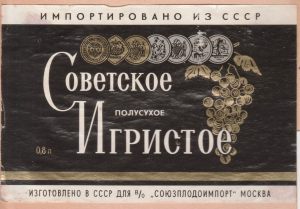
He was then escorted to the captain’s cabin and feted with cakes and coffee. After an exchange of pleasantries he was escorted back to the pilot boat and the skipper of the AGI thrust a bottle of Crimean champagne into his hands with the words, ‘And this is our gift to Major Hughes-Wilson. Please to give him our best wishes!’

It was a slightly stunned Mike Dawkins who later reported back to J2 at Stanley HQ. As we drank the Russian champagne he kept muttering, ‘I don’t believe it. How did they know?’

I briefed the General and his Chief of Staff, Roger Wheeler, later. They fell about laughing. ‘So much for DI 24 Security.’

I don’t think Mike ever fully recovered from being rumbled…

 And here is the bottle (see right).

Telegraph British Troops Must Have Better Legal Protection

The following letter from John Hughes-Wilson was published in The Telegraph on Saturday, 29 June 2019, in response to an article entitled ‘British troops must have better legal protection, say Boris Johnson and Jeremy Hunt‘ by Anna Mikhailova, the newspaper’s deputy political editor.

Letter to the editor

‘The crass equating of soldiers doing their duty with criminal terrorists has done far more damage than people realise.

‘The result of this weak political leadership is that now almost all service personnel do not trust the MoD’s civil servants or politicians.

‘The armed forces have no separate votes or political clout, and so can be run down, exploited and used as political [mainly Treasury] pawns, with little fear of reprisal.

‘The military now feel they have been hung out to dry by political calculation.

‘Serving senior officers are reluctant to speak out, because they will be instantly muzzled or sacked by politicans.

‘This distrust of politicians will take a military generation to expunge and means that the ‘Military Covenant’ is just a piece of window dressing for cheap headlines.’

Mereo Books release ‘Chronicles of the Winter World’

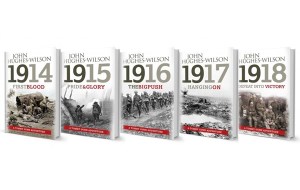
All five novels in the ‘Tommy Gunn’ World War I ‘Chronicles of the Winter World’ series are now published by Mereo Books.

Written by leading military historian, John Hughes-Wilson, these five historically accurate novels in takes us in the company of protagonist ‘Tommy’ Gunn from the outbreak of the Great War, through the horror of the trenches and arduous campaigns to the eventual Armistice.

Publication date was 28 June 2019, to mark the centenary of the opening of the Versailles Conference (on 28 June 1919) that marked the official end of World War I

‘A unique contribution to World War I literature’
Brian MacArthur, author: King and Country

In 1914, they could not have known just how long this war would last or just how many lives it would cost …

When we first meet TOM Gunn, he’s a young infantry lieutenant in the Sherwood Foresters, back on leave from India just as Europe catches fire in the chaotic summer of 1914.

The British Expeditionary Force (BEF) is off to France, and Gunn joins a hastily formed mixed battalion of reservists, regular and territorial soldiers. He soon finds himself pitchforked into the mayhem and suffering of unrelenting war.

Soon the high hopes of short conflict fade into the horrific reality of the trenches. Thaddeus Gunn and his men realise that this is going to be a long and bloody war and they will be lucky if any of them survive ….

Hughes-Wilson places the main character, Thaddeus (‘Tommy’) Gunn, at most of the major battles of the war, in order to show us the utter terror and slaughter suffered by the troops.
Although this series of books are fictional accounts, the use of real diaries of young officers who fought and quotes from newspapers of the day, give these novels authenticity and help the reader appreciate how people actually lived through the war.

Now, with the release of all five novels to mark the Centenary of the Treaty of Versailles, readers can follow Hughes-Wilson’s creation, ‘Tommy Gunn’ throughout the entire war. These powerful novels stand as a testament to the heroism and sacrifice of a generation of young men.

‘Gripping … superbly written, true-to-life down to the least military detail, and very exciting. Readers will be keen to follow the fortunes of Thaddeus Gunn’
Andrew Roberts, FRSL, historian

All five novels are available in paperback or ebook:

  • 1914 First Blood
    Paperback ISBN: 978-1-86151-277-2 210pp RRP £12.00
    ebook ISBN: B00Q386D90; £3.00
  • 1915 Pride & Glory
    Paperback ISBN: 978-1-86151-922-1 213pp RRP £12.00
    ebook ISBN: B07KMB934Q; £2.35
  • 1916 The Big Push
    Paperback ISBN: 978-1-86151-923-8 280pp RRP £12.00
    ebook ISBN: B07KKP874RRRP £2.35
  • 1917 Hanging On
    Paperback ISBN: 978-1-86151-925-2 234pp RRP £12.00
    ebook ISBN: B07KKNCS8C; £2.35
  • 1918 Defeat Into Victory
    Paperback ISBN: 978-1-86151-277-2 175pp RRP £12.00
    ebook ISBN: B07KKLRD7P £2.35

All five titles in the series are published by Mereo Books (an imprint of Memoirs Publishingand are available through all good bookshops and internet booksellers (see Mereo Books: Books by John Hughes-Wilson)

Local UK interest, Nottinghamshire:

Tommy Gunn, the central character in the series, comes from Nottinghamshire and serves with the Sherwood Foresters. (The author also served in the Sherwood Foresters early in his career.)

To request review copies or to be put in touch with the author, please contact:

Andrew Hayward
Court Publishing Services
andrew.hayward21@yahoo.com
Tel: 07876 155663 or 020 8761 0147

Further information:
www.johnhugheswilson.co.uk

Press release issued on behalf of Mereo Books & Court Publishing by Elly Donovan PR
elly@ellydonovan.co.uk | Tel: 01273 205 246

The Unsealing of a Presidency

On the 46th anniversary of his death, further hard corroboration of LBJ’s mysterious rise to power through Texan money can be found in the revelations of Robert A Caro New Yorker article ‘The Secrets of LBJ’s Archives: On a Presidential Paper Trail‘ (22 January 2019). Caro is writing the acclaimed definitive biography of President Lyndon Baines Johnson (four volumes so far)

Any doubts that LBJ was acting as a conduit for Federal tax money being passed to big Texan Corporations from 1939 onwards are comprehensively demolished by Caro’s hard documentary evidence.

The article lends support to the facts I reveal in my book JFK: An American Coup d’Etat about LBJ’s role in one of the darkest episodes of US history (notes for original sources).

Alphabetic index (there are no entries for the letter ‘Q’):
A | B | C | D | E | F | G | H | I | J | K | L | M | N | O | P | Q | R | S | T | U | V | W | X | Y | Z

Extract from JFK: An American Coup d’Etat

On LBJ and Texas

‘At the heart of the oil cartel was an informal, shadowy cabal calling itself the ‘8F Group’ after the suite where it held its meetings at the Lamar Hotel in Houston. The group had been in existence since the 1930s, and it brought together some of the richest and most powerful men in Texas. In their number by the early 1960s were also representatives from State and Federal Politics, lawyers, bankers, businessmen and the Mafia. In 1962-3, the Suite 8F Group included oil barons H L Hunt, Billy Byars, Sid Richardson and Clint Murchison; Congressional fixer, lawyer and LBJ crony, Homer Thornberry; local politicians, State Governor John Connally and State Attorney General Waggoner Carr; Lyndon Baines Johnson; his personal attorney, Ed Clark – Mr Fixit – as well as prominent bankers and businessmen, including selected Mafia Dons who were, after all, local ‘businessmen’. The Texas oil moguls had also gone to considerable lengths to cultivate J Edgar Hoover over the years; both Billie Byars of Humble Oil and Clint Murchison helped to pay for the FBI Director’s annual vacation at a Mafia-owned and run resort in Del Mar California. And all of them were friends with the Vice President, Lyndon Baines Johnson. Texas oil was big, powerful and had bought key individuals in Washington DC.

‘LBJ held a special position in the ‘8F Group’ because he was effectively their spokesman in Washington. Before America eventually joined the war in 1941, the Texans had creamed off Federal tax dollars for their companies by using their own placemen in Washington to direct the hosepipe of Roosevelt’s ‘New Deal’ government dollars to the Lone Star State. Sam Rayburn knew where his interests lay and by 1940 the powerful Texan Senator virtually controlled the Senate by his ability to pack key political committees with his friends. LBJ joined that group in the late 1930s and by 1960 he was openly the representative of Texas capitalism. One wit even jibed, ‘To understand LBJ, you have to go to the Brown & Root of the matter …” Brown & Root was the Texan Corporation that had made millions out of America’s involvement in the Second World War and had groomed and supported LBJ every step of his political career. LBJ was their paid-up representative in every way. As a Senator and Leader of the House, LBJ represented himself, the business interests of the Texas 8F Group (especially Brown & Root) and his constituents: and in that order.

‘By the autumn of 1962, the 8F Group were becoming collectively concerned about their President in Washington. Not only did they not own and control him, but he was beginning to do things that would reduce their income. For the power brokers, oil billionaires and bankers of Texas, the answer was simple.

‘Someone was going to have to do something about John F Kennedy. Up to then the rich Texans had tolerated him. But removing the Oil Depletion Allowance was a step too far. In 1962, $300 million dollars was a lot of money. Around the 8F Group table ‘groupthink’ was unanimous. John F Kennedy was dangerous. He would have to be stopped.

‘Texas said so.’

History’s Tipping Points: Kaiser Bill

According to documents in the RAF Museum archive in France, 100 years ago tomorrow Britain tried to kill Kaiser Wilhelm II in 1918 in a secret RAF bombing raid (David Keys, The Independent). History is full of ‘What ifs?’, some of which happen and others that don’t.

If Archduke Franz Ferdinand had survived assassination, the Great War may not have happened; if Kaiser Bill had been murdered, this revelation suggests the conditions for World War II may not have arisen.

Sliding doors? Alternative histories? Maybe … but it’s also fascinating to play out mentally the ‘war game’ scenarios of crucial tipping points of history. What will be revealed in 100 years’ time from now that will keep future historians guessing about what may have happened differently?

SaveSave

SaveSave

Royal Weddings and Other Disasters

‘Did the earth move for you, darling?’

‘No, it bloody well didn’t! How am I expected to perform with all these damn’ courtiers standing around gawping?’
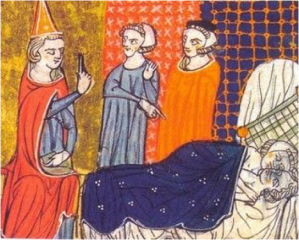
Fortunately for Prince Harry and Meghan, their wedding night will (hopefully) not be spoiled by the ancient custom of the public consummation of a royal marriage.

Throughout history, there have been some disastrous marriages involving royals. Not every royal wedding is the stuff of fairy tales.  Whilst we wish the happy couple all the best, history offers some cautionary examples.

Perhaps the most bizarre was the old custom of ‘bedding.’ The original purpose of this ceremony was to record the consummation of a marriage, without which the union could later be legally annulled. Public bedding was therefore essential for royalty and the nobility to establish the legality of any union. In medieval Iceland, a marriage was only valid if it included the bedding ritual witnessed by at least six men, including a lawyer. That must have put many a nervous groom off his stroke ….

Consummation was often a problem in dynastic marriages because of the age of the participants. For example, Isabella of Valois was just 6 years old when she was married off to King Richard II.  (But then, they couldn’t spell ‘paedophilia’ back in 1396 ….)  And Queen Mary II, of ‘William and Mary’ fame, was only 15 when she married William of Orange in 1677.

A less fortunate young bride was Marie-Antoinette, daughter of Austria’s Holy Roman Empress, who was married off by proxy in 1770 to the French Dauphin, the future King Louis XVI.  She was just 14, he was barely 15. Consummation was impossible because the groom was not present at his own wedding. That was held in the bride’s native Vienna; unfortunately, Louis was in Paris.

When the young bride finally arrived in France, her petulant husband sulked all through the wedding mass in Notre Dame and then, embarrassingly, later failed to do his public duty. As distinguished guests (including an archbishop to bless the newlyweds) crowded into the happy couple’s bed chamber to watch, something went wrong. An embarrassed Louis could not perform in public. It would be seven long years before Louis and Marie Antoinette finally consummated their marriage, making them the butt of suitably Rabelaisian jokes by court and commoners alike.

French royal weddings already had a dodgy track record.  On 18 August 1572 an arranged marriage between the Protestant (or ‘Huguenot’) Henri de Navarre, and Marguerite de Valois, the Catholic daughter of King Henri II, was designed to reunite two French royal houses by ending France’s savage religious civil war. It went wrong from the start.

The nervous groom had to stand outside Paris’s Notre Dame Cathedral during the religious part of the ceremony – because he was not a Catholic! Inside, the blushing bride was forced by her brother to go through with the wedding at knife point. Six days later, on 24 August 1572, Catholic mobs slaughtered thousands of French Protestants gathered in Paris for the great royal wedding knees-up in the ‘St. Bartholomew’s Day Massacre.’ Henri himself only survived the carnage by swiftly promising to convert. Sadly the newlyweds’ marriage did not survive – it was later annulled.

Britain has had its own problems with royal marriages, too. After the death in childbirth of his third wife, Jane Seymour, Henry VIII looked around for a suitable Protestant dynastic replacement. The artist Holbein was despatched to Germany to paint a prospective bride, Anne of Cleves. He returned with a portrait that appears to have flattered her, because when she arrived in England Henry took one look and fled, dismayed by her drab looks and lack of sophistication, famously calling her ‘the Flanders mare’. Henry’s Chancellor, Thomas Cromwell, convinced him to go through with the wedding for diplomatic reasons. After just one night, the king wanted out, proclaiming, ‘I liked her before not well, but now I like her much worse’, and complaining that she also had a bad case of BO. The marriage was quietly annulled on the grounds that it had never been consummated and, as a result, Anne was never crowned, just quietly pensioned off to court as ‘the King’s Beloved Sister’. Looking at Henry VIII’s track record with his brides, Anne seems to have had a lucky escape from the fat old monster.

Another continental import, Princess Augusta of Saxe-Gotha, arrived in London two centuries later in 1736, at the tender age of 16. She had been promised to King George II’s oldest son, Frederick. Speaking not a word of English, and clutching her favourite toy doll, she was likened to ‘a frightened puppy.’ Within ten days the unfortunate maiden was bundled into her wedding gown and marched off down the aisle. She was so nervous that she vomited down her wedding-dress and all over the skirt of her new mother-in-law. The wedding took place nonetheless, with Britain’s Hanoverian Queen translating the ceremony into Augusta’s ear.

History doesn’t record what happened on the new Princess of Wales’ wedding night but, despite its inauspicious beginning, the marriage is thought to have been a happy one and was definitely consummated. She bore nine children.

One of her grandchildren was Prince George Frederick Augustus, the dissolute eldest son of King George III. A marriage was arranged with his German cousin, Caroline of Brunswick. The future royal couple had never met. Worse, there was a little problem.  George was already married – to Maria Fitzherbert, a widow six years his senior and a commoner to boot. This existing marriage was recognised by the Catholic Church but not by English law. George protested, but the King ordered him to wed Caroline or lose his allowance.

In April 1795 a surly George met his affianced for the first time. Disappointed by Caroline’s looks and casual attitude to personal hygiene, the reluctant fiancé promptly demanded a large brandy, while the bride-to-be complained that her prince was ‘nothing like as handsome as his portrait.’

At the wedding, George arrived very late and very drunk. He managed to fall over on the altar steps in the Chapel Royal and only muttered his vows when his father, the King, shouted to him to behave himself – or else. The bridegroom then spent his wedding night drunk as a skunk, unconscious on the bedroom floor. The unhappy couple eventually produced a daughter, Princess Charlotte Augusta, in 1796. Soon afterwards George demanded a separation; but Caroline flatly refused any divorce.

An attempt to blacken the Queen by alleging ‘scandalous and improper conduct’ became the subject of an official investigation, but failed amid widespread public sympathy for Caroline. George got his revenge by having his Queen locked out of the Abbey for the coronation service in 1821. Poor old Caroline died just two weeks after guards stopped her attending her estranged husband’s coronation – by no means the first or the last victim of a disastrous royal marriage.

Closer to home the story has continued. Royalty are no more immune to the travails and trials of marriage than anyone else. Royalty pays a heavy public price for its privilege and duties – in some cases with harsh consequences, as the abdicated King Edward VIII found to his cost in 1936, when he announced he intended to marry Wallis Simpson, a divorced American.
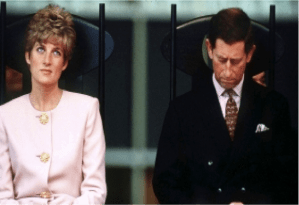
And everyone remembers the fairy tale wedding of the Prince of Wales and Lady Diana Spencer in 1981 ending in bitter estrangement, divorce and ultimately tragedy. Now Britain’s future king will be a divorcé. The gilded cage of royalty can destroy relationships just like any other.

So today, let us raise our glasses to the happy couple and wish them, sincerely, all the luck in the world. They will need it on life’s journey together.

SaveSave

SaveSave

SaveSave