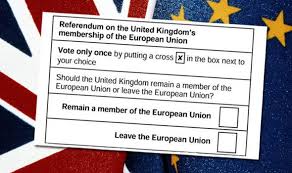
 The only constant in life is change. If anything proves the truth of this saying, it is British politics. Although many regard the recent chaotic shambles, barefaced lies and back-stabbing intrigue of Brexit as a sure sign of the weakness of the British political system, it is not. It is a shambolic yet important example of the very real strengths of Britain’s unwritten constitution.
The reason is clear: any unwritten set of rules is more flexible and adapts to reflect the wishes of the people far better than any written constitution set in stone.
Professor Vernon Bogdanor (Research Professor: Centre for British Politics and Government at King’s College, London) once said he made ‘a living of something that doesn’t exist’. He also quipped that the British constitution can be summed up as: ‘Whatever the Queen in Parliament decides is law.’ This is basically true – and Brexit has suddenly brought the shadowy patchwork that represents the British constitution to public attention.
The late Tony King (former Professor in the Department of Government at the University of Essex), a well-known election-night commentator for the BBC, concluded: ‘The British constitution is a mess, but it’s a mess that works because it can evolve as society changes.’ He was adamant that we should leave well alone, because any attempt to draft a set of rules – creating a ‘written Constitution with a capital C’ – might only make matters worse.
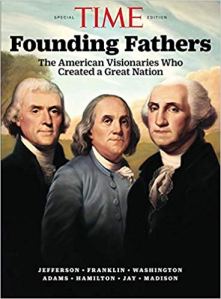 For example, what exactly did the famous Founding Fathers of the United States of America come up with 232 years ago in their famous 1787 written Constitution on contentious subjects like abortion, slavery and the latest – the 27th Amendment – which prohibits laws on ‘delaying new Congressional salaries from taking effect until after the next election of Congress’? In the British context, would MPs’ salaries really require an amendment to a national constitution?
Nevertheless, only four other countries have unwritten constitutions: Israel, Canada, New Zealand and Saudi Arabia. Of those, the British constitution is regarded as unique. Two questions then arise:
- What are the main characteristics of Britain’s peculiar constitutional arrangements?
- How has the British constitution got to where it is today and altered in response to the changing nature of politics over the centuries?
British history has been a long and bloody tale, characterised by a simmering state of rebellion, insurrection and even revolution. The Norman barons first clipped the King’s wings in the Magna Carta, signed at Runnymede in 1215. Wat Tyler’s Peasants’ rebellion of 1381 – with its catchy slogan, ‘When Adam delved and Eve she span, who was then the gentleman?’ – demanded a reduction in taxation, an end to the slave labour of serfdom, and the removal of the King’s corrupt lawyers and officials: it changed how England was ruled. The battle for control culminated in cutting off King Charles’s head in 1649 for trying to rule like a dictator and causing a civil war. Historically the English have always – eventually – rebelled against unjust authority and the abuse of power.
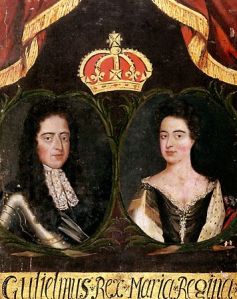 The ‘Glorious Revolution’ of 1688, when Parliament kicked out the last Stuart King and invited a foreigner to reign, can be seen as the root of today’s modern constitution. The 1689 Bill of Rights is still the bedrock, even today, of the UK’s constitutional arrangements. That Act settled the primacy of Parliament over the monarch, providing for the regular meeting of Parliament, free elections to the Commons, free speech in parliamentary debates, and some basic human rights, such as freedom from ‘cruel or unusual punishment’. It also sets out the need for ‘the Crown’ to seek the consent of the people, ‘as represented in Parliament’.
So, from the 17th century onward, the primacy of Parliament and the liberties of the subject have been set out, not by a set of constitutional rules, but by the law.
Since then there have been at least three massive changes that have changed British society: the long and interlinked industrial, political and social revolutions, all of which have been reflected by changing parliamentary laws. Those laws have modified the UK’s political arrangements over the years to reflect the real changes in society. In that legal flexibility and ability to react to change lies the real strength of Britain’s unwritten constitution.
The present Parliamentary shenanigans over Brexit are a perfect reflection of both the problem and the solution. By pitting Parliament against the people, the squabbling MPs are merely reflecting the deep divisions in society at large. Rarely has public disillusionment with Britain’s warring two main party-political tribes been so deep and angry. Tribal loyalties may sustain the political status quo temporarily, but ignoring the wishes of the majority of taxpayers and voters will not solve the problem.
The great tectonic plates of Britain’s constitutional arrangements are shifting before our eyes, never mind beneath our feet. It is quite clear that Britain is changing and the two main parties, and indeed the electorate, are splintering into at least four different parties (Labour Remain/Labour Out and Conservative Stay/Conservative Quit) plus God knows what other mix of single issue, special-interest groupings from the Greens to the SNP.
This political dogfight is potentially extremely dangerous. Pitting the people against the Parliament and ignoring the voters’ wishes can only end in tears. Historical precedent shows that unresolved politics of this kind tend to make a nation essentially ungovernable by consent. Once trust has been lost in normal politics, many turn to darker forces.
It is all too easy and convenient to forget the foment of the 1930s, when large sections of British society and political elites were drawn to – and openly supported – Sir Oswald Mosley’s Nazi solution to the nations’ economic problems. It took a revolution in British life, in the form of World War II, to restore national unity.
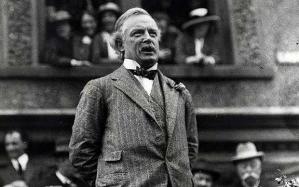 If we go back to 1911 there is an earlier revolutionary change in British politics, which was swiftly resolved by an unwritten constitution enshrined in laws. When the House of Lords’ rejected Chancellor of the Exchequer, David Lloyd George’s ‘People’s Budget‘ in 1909, the House of Commons demonstrated its dominance over the Lords by holding new elections and tabling a Parliament Act to limit the power of the Lords. The peers threw it out. Following a snap general election, the Act was passed in 1911 with the support of King George V, who threatened to create enough new peers to outvote the Conservative majority in the Lords. This was nothing less than a constitutional revolution, solved by using new laws to change the balance of power.
Something equally drastic may be needed to undo the damage of Brexit. We should not under-estimate the potential trouble that could lie ahead. Brexiteer peers warned Remain-backing MPs they risked the possibility of a violent uprising by voters if they refused to accept the result of the 2016 EU referendum. Lord Lawson, the former chancellor, said there was a danger of a ‘very ugly situation’ arising because ‘insurrectionary forces’ could be left feeling ‘they cannot trust Parliament’.
A worried Lord Forsyth, a former Conservative Scottish Secretary, in April 2019 said a ‘revolutionary action’ had taken place in the Commons. Today, we are actually living through Britain’s long-running constitutional revolution. Whatever your personal views on Brexit, we should all be deeply concerned at the rift between Parliament and the people, specifically Westminster’s refusal to accept the people’s judgment in the referendum, despite clear promises to abide by it by successive Prime Ministers.
It’s not just the rat-infested, antiquated House of Commons that is letting us down with its squabbling MPs, but a Prime Minister who has lied consistently to the voters. Who can trust any politician these days? That’s a serious challenge to the way UK is governed. The question can be easily summed up: do the political elite still believe in people’s democracy – or do they have the power to overturn the result of an election majority?
The long revolution continues; Brexit is already changing Britain’s constitution.
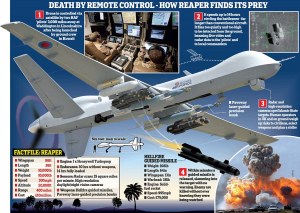 Like many others, I was surprised by the announcement by Air Chief Marshal Sir Stephen Hillier, Chief of the Air Staff, that his Reaper drone crews will be eligible for the new Operational Service Medal for their contribution to the war in Syria and the defeat of ISIS (also known as Daesh). Traditionally, medals have always been awarded based on risk and rigour. It may seem a reasonable assumption that there is not much risk sitting in a nice warm office up at RAF Waddington in Lincolnshire where they operate their Unmanned Air Vehicles (UAVs). More like playing computer games, perhaps? Where is the risk and rigour in that?
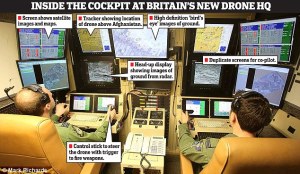 During the campaign to destroy the extremists in Iraq and Syria, drones were used to carry out strikes, gather intelligence and conduct surveillance. While front-line operational aircrew do operations for maybe six months or a year at a time, drone operations staff face different challenges The Reaper force is on duty 24/7/365, monitoring an enemy that is elusive, dangerous and determined to attack the West in any way it can in pursuit of its twisted, fanatical world view. The personal strain and pressure watching the every move of these individuals is immense and unrelenting.
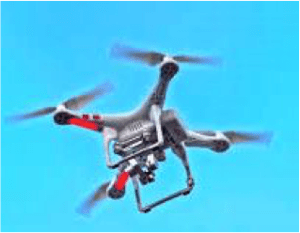 This insight into the combat stress of the new warfare is a reflection of how in the last decade drones have become a new battlefield in the ‘vertical flank’. As long ago as 2004, the militant group Hezbollah began to use ‘adapted commercially available hobby systems for combat roles’. These modified toys can be bought easily, as the Gatwick debacle in December 2018 demonstrated, and – at prices ranges from US $200 to $700 – they are as cheap as chips to the military.
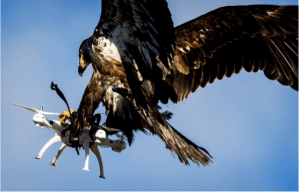 ‘As drones become deadlier, stealthier, faster, smaller and cheaper, the nuisance and threat posed by them is expected to increase, ranging from national security to individual privacy,’ Grand View warns. ‘Keeping the above-mentioned threat in mind, there are significant efforts – both in terms of money and time – being invested in the development and manufacturing of anti-drone technologies.’ The Dutch have even trained eagles to attack drones.
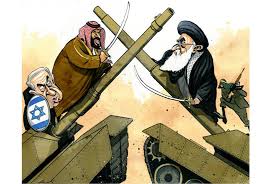
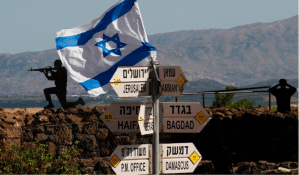 The Roman poet, Horace, once observed, ‘when your neighbour’s house is on fire, you should worry.’ It now looks as whole Middle East could catch fire, because the embers of the Syrian civil war have morphed into something much more dangerous, risking setting off a major new war between Israel and Iran.
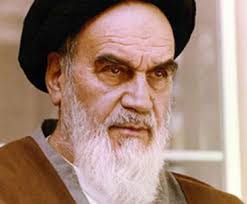 The problem goes back to 1979 when Iran deposed the US-backed Shah, America’s closest ally in the Middle East. However, Iranians soon found that they had swapped one dictator for another, the Shi’ite religious fanatic Ayatollah Khomeini. His battle cry was ‘Death to Israel, Death to America.’ Since then, Khomeini’s Islamic Revolution has had far-reaching consequences for Iran and for the Middle East. Tehran is now wedded to violent anti-Western policies, international terrorism, crushing internal dissent and exporting their Shi’ite version of revolution.
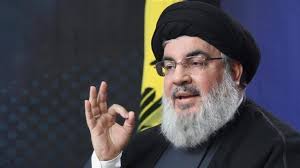 Emboldened by Iran’s protective umbrella, speaking at a rally marking the 40th anniversary of Iran’s Islamic Revolution and the overthrow of the Shah, Hezbollah’s leader (Hassan Nasrallah) warned that Lebanon would ‘defend Iran in the event of war,’ and ‘if America launches war on Iran, it will not be alone in the confrontation, because the fate of our region is tied to the Islamic Republic’.
 Rouhani also vowed Iran would defeat harsh US sanctions, re-imposed after President Donald Trump withdrew from Tehran’s nuclear accord with world powers last year. Meanwhile Iran’s secret drive to acquire nuclear weapons continues apace.
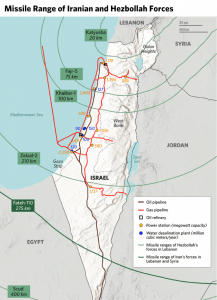
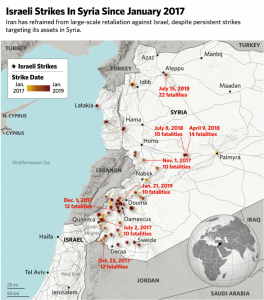 In May 2018 Iranian forces fired 50 rockets and mortars into the Golan Heights. This barrage did not inflict a single casualty and caused negligible damage. Israel’s prompt response was airstrikes hitting more than 70 targets. With those strikes, Israel demonstrated its ability to retaliate, warning Iran that attacking Israel would only invite an even more forceful reply. Iran backed down. Its limited capabilities in Syria makes Tehran nervous of any escalation – for now. Israel has a significant military advantage, enjoying overwhelming air superiority that can kill Iranian forces and destroy their equipment.
 The danger is that any escalation from Iran could spark a major escalation of fighting, which in turn would be met almost certainly with an overwhelming Israeli response in Lebanon and Iraq. Israeli Prime Minister Netanyahu spells out the consequences: ‘Whoever tries to hurt us, we will hurt them. Whoever threatens to destroy us will bear the full responsibility.’
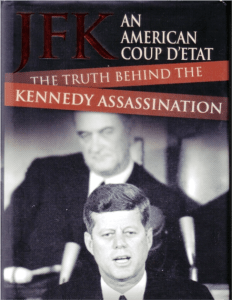 On the 46th anniversary of his death, further hard corroboration of LBJ’s mysterious rise to power through Texan money can be found in the revelations of Robert A Caro New Yorker article ‘
 The trouble with August is that the historical record shows that whilst everyone is on holiday it’s a great month to start a war.
 The threat is mortal. Tehran needs to sell its oil to survive. The lack of oil revenue could bankrupt Iran. The reaction to American threats from the regime was therefore predictable: Iranian President Hassan Rouhani promptly threatened to disrupt international oil shipments through the Persian Gulf if renewed US sanctions strangle Iran’s oil sales. ‘No one who really understands politics would say they will block Iran’s oil exports, and we have many straits, the Strait of Hormuz is just one of those …. We are the honest men who have throughout history guaranteed the safety of this region’s waterways. Do not play with the lion’s tail, it will bring regret.’
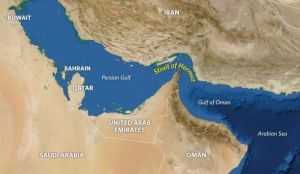 In turn, the Americans have warned Iran off. According to Washington, ‘Iran has threatened to close the Strait of Hormuz. They’ve done that in the past. They saw the international community put dozens of nations of the international community naval forces in for exercises to clear the straits. Clearly, this would be an attack on international shipping, and it would have, obviously, an international response to reopen the shipping lanes with whatever that took, because of the world’s economy depends on those energy supplies flowing out of there.’
 Sir Winston Churchill famously growled, ‘Democracy is the worst form of government – except for all the others.’
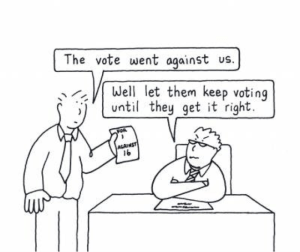 Nowhere was this more in evidence than the 2008 farce of Irish voters rejecting the Lisbon Treaty, only to be sent back to vote again after EU officials’ behind-doors deal to force a second referendum. Similar European Commission’s contempt for democratic majorities – and for democracy itself – has been seen in Denmark and France. For Brussels, ‘the people’ cannot be trusted and must be forced to vote again until they come up with the ‘right answer.’ This is dangerous stuff and reflects Bertholt Brecht’s sardonic comment on Communist elections: ‘Would it not be simpler, if the government simply dissolved the people and elected another?’
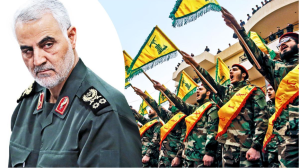 ‘The Assyrian came down like the wolf on the fold,’ wrote Lord Byron in his famous poem about the ancient Persians on the rampage. Well, the modern Persians are on the rampage now; and they are right on our doorstep.
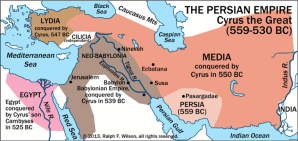 One of the mistakes Westerners make is thinking that the Middle East is run by Arabs: wrong. The Middle East is mainly split between Persians and Arabs; and they don’t get on – and never have. The ancient Persians were the bane of Greece and Rome; it wasn’t until the fanatical Arabian warriors of Islam conquered Persia in 651 that the Persians even became Muslim. To this day Persia – now calling itself Iran (after its Persian name) – is a separate culture, language and even a separate branch of Islam.
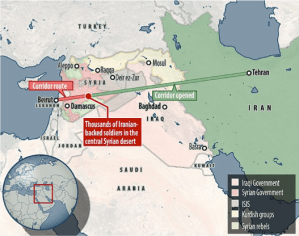 Iran’s efforts to expand its influence are there for all to see. Following the rout of ISIS by Kurdish infantry and American and Russian air power, Iran now controls large swathes of the Middle East, as well as dominating the governments in Baghdad and Damascus, whilst simultaneously intimidating the Gulf States. Through its use of proxy fighters like the Houthis in Yemen, Hezbollah in Lebanon and Hamas in Gaza, Tehran’s tentacles have now reached the Mediterranean. Iran is busy setting itself up as a regional superpower.
 For once I find myself in total agreement with Vladimir Putin, who observed recently in a Blinding Glimpse of the Obvious that ‘the world is becoming a more chaotic place.’ Whilst Pres-for-life Vlad’s BGO doesn’t exactly qualify him as a great thinker, this time he is absolutely right. There’s a definite feeling abroad of an unravelling in world affairs; an uneasy sense that something nasty is lurking round the corner of history ….
 Well, that’s it. The war is over, ISIS is beaten and on the run. We can all relax and bring the boys home. Mission accomplished.
 John Hughes-Wilson